


Start Your Aviation Journey with the Best Flying School in India
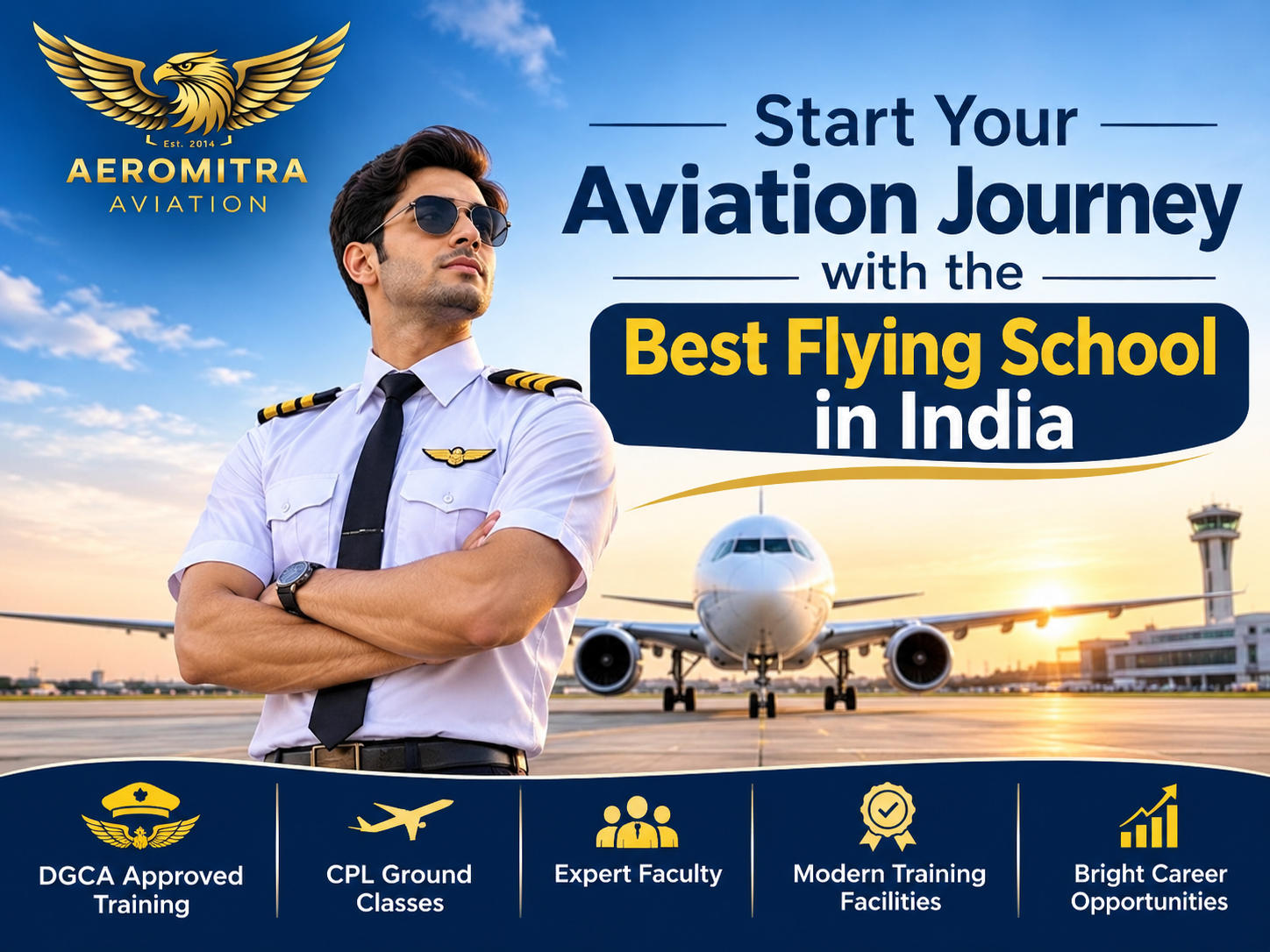
Becoming a commercial pilot is an exciting career goal for students who dream of flying aircraft and exploring the world of aviation. However, achieving this goal requires proper education, practical training, dedication, and professional guidance. Choosing the best flying school in India is one of the most important decisions for aspiring pilots. The right training pathway helps students understand aviation fundamentals, prepare for DGCA examinations, and develop the knowledge and flying skills required for a professional aviation career.
India offers several opportunities for pilot training, but students should carefully evaluate their options before selecting a flying school. Understanding the training process, eligibility requirements, facilities, and career opportunities can make this journey easier.
Understand Your Career Goals Before Choosing a Flying School
Before selecting a flying school, identify your aviation career goals. If you want to become a commercial airline pilot, you should understand the training pathway required to obtain a Commercial Pilot Licence (CPL).
Commercial pilot training involves theoretical education, practical flight training, aviation regulations, and examinations. Students must also meet the applicable medical and educational requirements.
Understanding these requirements early helps you prepare for each stage of training. It also allows you to select an institute or training pathway that matches your long-term career objectives.
Check the DGCA Approval and Recognition
One of the most important factors to consider when selecting a flying school is its regulatory approval and recognition. In India, the Directorate General of Civil Aviation (DGCA) regulates civil aviation training and licensing requirements.
Students should verify whether a flying training organisation holds the necessary approvals for the training it offers. They should also check whether the course structure follows applicable DGCA requirements.
Before making a financial commitment, research the organisation's credentials, training facilities, aircraft availability, and examination preparation support.
Choosing an appropriately recognised training organisation helps students follow the required licensing pathway with greater confidence.
Explore Different Pilot Training Schools in India
There are several pilot training schools in India offering different training programmes and facilities. However, not every school provides the same learning experience or training environment.
When comparing options, consider the following factors:
-
Regulatory approvals and recognition.
-
Availability and condition of training aircraft.
-
Experienced flight instructors.
-
Ground training facilities.
-
Student-to-instructor ratio.
-
Flight training schedules.
-
Safety procedures and maintenance standards.
-
Support with licensing requirements.
You should also understand the school's training structure and ask about the expected duration of the programme.
Comparing these factors can help you identify a suitable training organisation according to your educational background, budget, and career plans.
Understand the Eligibility Requirements for Pilot Training
Students should understand the eligibility requirements before applying for commercial pilot training.
In India, aspiring commercial pilots generally need to meet the prescribed educational, age, medical, and examination requirements.
Important requirements include:
Educational qualification: Students generally need to complete Class 12 with Physics and Mathematics or meet the applicable DGCA requirements for these subjects.
Medical fitness: Candidates must satisfy the prescribed aviation medical standards. Class 2 and Class 1 medical assessments are important parts of the licensing pathway.
Age requirement: Applicants must meet the minimum age requirements applicable to the relevant licence and training stages.
English proficiency: Pilots need suitable English communication skills to understand aviation instructions and communicate effectively.
Students should verify the latest DGCA requirements before beginning their training journey.
Importance of Ground Training and DGCA Exam Preparation
Ground training is an essential part of commercial pilot education. It provides students with the theoretical knowledge required to understand aircraft operations and aviation safety.
Important subjects generally include:
-
Air Navigation
-
Aviation Meteorology
-
Air Regulations
-
Technical General
-
Technical Specific
These subjects help students understand weather conditions, navigation principles, aviation rules, aircraft systems, and operational procedures.
A structured learning approach and regular practice can improve examination preparation. Students should select training support that provides clear explanations, updated study materials, practice questions, and guidance from experienced instructors.
Strong theoretical knowledge also helps aspiring pilots understand practical flight operations more effectively.
Evaluate Flight Training Facilities and Aircraft Availability
Practical flight training plays a major role in developing professional flying skills. Students need sufficient opportunities to practise aircraft handling, navigation, communication, and flight procedures under instructor supervision.
Before choosing a flying school, ask about its aircraft fleet, maintenance arrangements, instructor experience, and flight scheduling process.
Also, understand how the organisation manages weather-related delays, aircraft availability, and student training progress.
A well-organised flight training environment helps students gain practical experience while following established aviation safety standards.
Compare Commercial Pilot Training Costs and Budget
The cost of becoming a commercial pilot can vary depending on the flying school, training location, aircraft type, flight hours, and additional expenses.
Before selecting a commercial pilot training institute in India, request a detailed breakdown of the expected training costs.
Consider expenses such as:
-
Ground school fees.
-
Flight training charges.
-
Aircraft and instructor costs.
-
Medical examination expenses.
-
DGCA examination fees.
-
Study materials and equipment.
-
Accommodation and transportation.
Do not select a training organisation based only on the lowest advertised fee. Understand what the package includes and whether additional charges may apply.
Proper financial planning helps students and their families make informed decisions about pilot training.
8. Look for Experienced Instructors and Student Support
Experienced instructors play an important role in developing a student's aviation knowledge and practical skills.
A good training environment encourages students to ask questions, understand concepts, practise regularly, and improve their performance.
Before joining a flying school, learn about the qualifications and experience of its instructors. You should also ask whether students receive academic guidance, progress monitoring, and support when they face difficulties during training.
Consistent guidance can make the learning process more organised and help students develop confidence.
9. Understand Career Opportunities After Commercial Pilot Training
Completing commercial pilot training can open several career opportunities in the aviation sector, depending on the candidate's qualifications, experience, and applicable licensing requirements.
Potential career pathways include:
-
Commercial airline pilot.
-
Charter aircraft pilot.
-
Corporate aviation pilot.
-
Cargo aircraft pilot.
-
Flight instructor, subject to additional qualifications.
-
Other specialised aviation roles.
However, obtaining a CPL does not automatically guarantee an airline job. Candidates may need additional qualifications, aircraft-specific training, selection assessments, and experience depending on the employer.
Students should research career requirements and understand the steps involved in moving from pilot training to professional employment.
10. How AeroMitra Helps Aspiring Pilots Begin Their Journey
Choosing the right flying school and understanding the commercial pilot training process can feel challenging, particularly for students entering the aviation industry for the first time.
AeroMitra helps aspiring pilots explore their training options through aviation career guidance, course selection assistance, and information about flying academies. Students can seek guidance to understand DGCA requirements, ground examination preparation, medical eligibility, and the overall CPL training pathway.
With proper information and planning, aspiring pilots can make more confident decisions about their aviation education.
Before selecting a flying academy, students should evaluate their requirements, compare available options, and understand the complete training process.
Conclusion
Starting an aviation career requires dedication, preparation, and the right training decisions. Choosing the best flying school in India involves evaluating regulatory recognition, flight training facilities, instructor experience, ground education, and overall costs.
Aspiring pilots should research different training options, understand DGCA requirements, and plan their education carefully before enrolling. With the right guidance and consistent effort, students can work towards achieving their dream of becoming professional pilots.
AeroMitra aims to support aspiring aviators with useful guidance and training information, helping them take informed steps towards a successful aviation career.
Frequently Asked Questions (FAQs)
1. How do I choose the best flying school in India?
Compare DGCA approval, aircraft availability, instructor experience, flight training facilities, ground education, safety standards, and overall training costs.
2. What qualifications are required to become a commercial pilot in India?
Students generally need Class 12 Physics and Mathematics or equivalent qualifications that meet DGCA requirements, along with the prescribed medical fitness, age, and examination requirements.
3. How long does commercial pilot training take in India?
The duration varies depending on the training organisation, flight availability, weather, student progress, and completion of the required examinations and flying hours.
4. What is the role of DGCA in pilot training?
The Directorate General of Civil Aviation regulates civil aviation in India and establishes the applicable requirements for pilot licensing, training organisations, examinations, and aviation safety.
5. Can I become an airline pilot after completing CPL training?
Yes, a CPL is an important qualification for a commercial flying career. However, airline employment may require additional qualifications, aircraft-specific training, assessments, and experience.

 English
 Arabic
 French
 Portuguese
 Deutsch
 Turkish
 Dutch
 Italiano
 Russian
 Romaian
 Portuguese (Brazil)
 Greek
