


Solar Permit Package Preparation: A Sheet-by-Sheet Guide
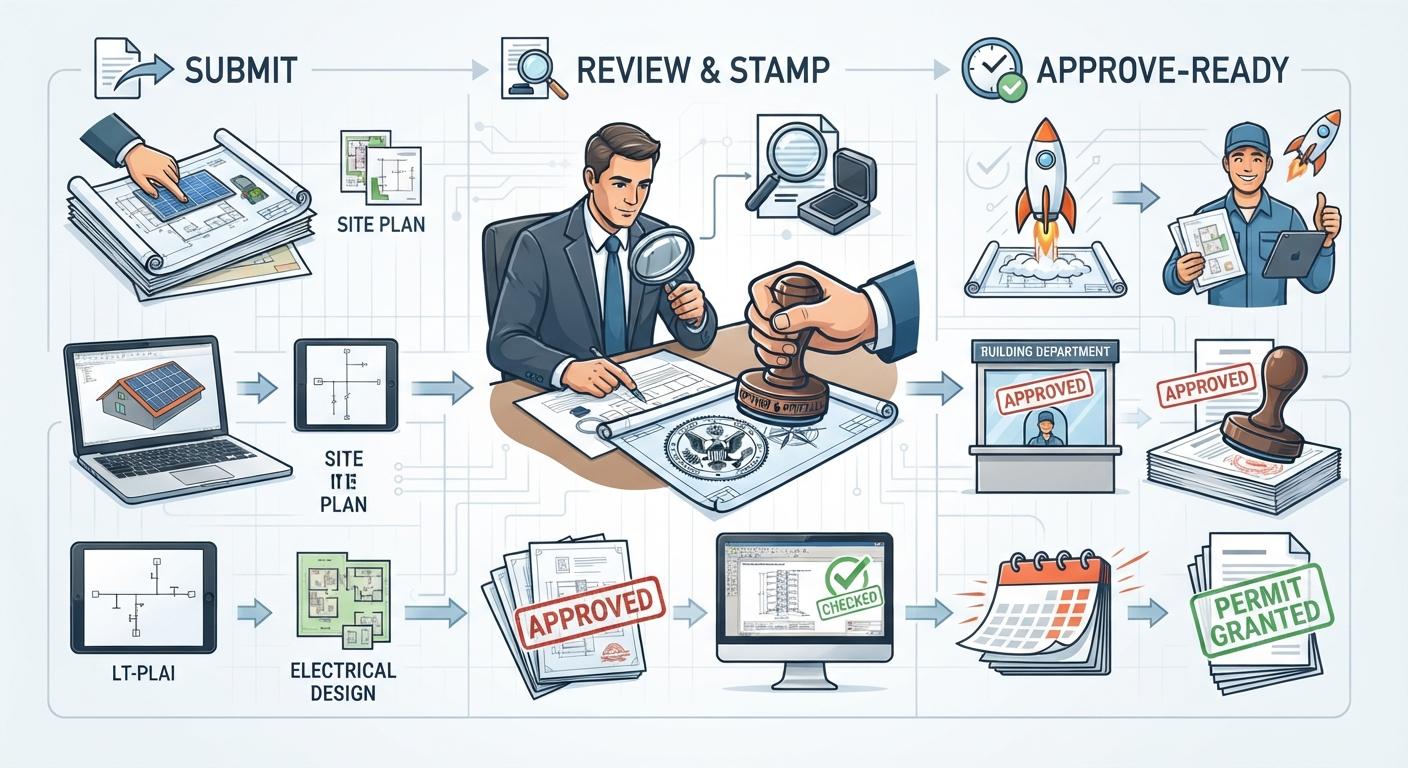
A solar permit package is judged before anyone reads it closely. Plan reviewers open the file, scan the sheet index, check the cover page, and look for missing pieces. If the labels are unclear, the electrical diagram doesn't match the roof plan, or the structural letter is missing, the package goes to the bottom of the pile with a list of corrections. At PTOEdge, we've seen how much time installers lose to packages that were nearly right but not quite complete.
Careful solar permit package preparation is the difference between a permit issued in days and one stuck in correction cycles for weeks. It means assembling the right sheets, forms, calculations, and supporting documents in the order and format each AHJ expects. If your submissions keep coming back with comments, get your package prepared by a team that does this every day.
This guide walks through what a permit package is, the main package types, why professional preparation pays off, what belongs on each sheet, how to prepare a package step by step, and who benefits most from outsourcing the work.
What Is Solar Permit Package Preparation?
Solar permit package preparation is the process of gathering, drafting, checking, and organizing every document a building department needs to approve a solar installation. It covers technical drawings, engineering, equipment documentation, administrative forms, and supporting letters, all compiled into one submission.
A permit package isn't a single drawing. It's a coordinated set of documents that has to tell one consistent story. The roof plan shows where the modules go, the electrical diagram shows how they connect, the structural letter proves the roof can carry them, and the spec sheets confirm the equipment is listed and approved. If any piece contradicts another, the reviewer will flag it.
The technical core of every package is a well-organized group of solar permit sheet sets, usually numbered PV-1, PV-2, and so on. Alongside them, most rooftop projects need sealed engineering, often delivered through structural engineering letter services that confirm framing capacity under local wind and snow loads.
Technical vs. Administrative Documents
Packages usually include two categories of documents:
- Technical: plan sheets, electrical diagrams, structural calculations, equipment spec sheets, and labeling plans
- Administrative: permit application forms, contractor license and insurance, homeowner authorization, HOA approvals where required, and fee payment
Missing administrative items cause just as many delays as technical mistakes, so both need the same attention.
Types of Solar Permit Packages
The contents of a package depend on the system type and the jurisdiction. These are the most common types.
1. Residential Rooftop Package
The standard package for home systems. It includes a cover sheet, site plan, roof plan, attachment details, electrical diagram, labels, spec sheets, and a structural letter where required.
2. Solar Plus Storage Package
Adds battery documentation, such as equipment location, clearances, backup load panel details, fire separation requirements, and updated electrical diagrams. Some jurisdictions require separate fire department review for storage.
3. Commercial Package
Larger and more detailed. Commercial packages often include multiple roof planes, ballast plans, detailed structural analysis, sealed electrical drawings, and coordination with the building owner's documentation.
4. Ground-Mount and Carport Package
Adds foundation design, pile or footing details, trenching routes, setback distances from property lines, and sometimes zoning approval documents.
5. Automated Permit Package
For eligible residential systems in participating jurisdictions, the package is prepared for an online platform instead of manual review. Projects that qualify for SolarAPP+ digital permit approvals need accurate system data entered into standardized fields, and can often be approved the same day.
6. Utility Interconnection Package
Separate from the building permit, the utility needs its own set of documents, usually an application, single-line diagram, equipment details, and sometimes site photos. Many installers prepare it in parallel using utility interconnection package support so both approvals move forward together.
7. Revision Package
When a reviewer issues comments or the system changes, a revision package with clouded changes and a response letter is submitted. Clear revision packages get approved much faster than full resubmissions.
Benefits of Professional Package Preparation
Preparing packages takes skill and time. Outsourcing it brings several clear advantages.
Higher First-Pass Approval Rates
Experienced preparers know what reviewers look for and include it the first time. Fewer correction cycles mean faster permits and faster installations.
Consistent Quality Across Jurisdictions
Every AHJ has its own preferences. Professional teams track these differences, including code editions, sheet sizes, labeling rules, and submission portals, so each package fits its destination.
Time Saved for Your Team
Assembling packages, filling out forms, and chasing missing documents takes hours per project. Handing this off to solar permit expediting services frees your operations team to focus on scheduling and customer communication.
Fewer Post-Sale Surprises
When the permit package is built from the same data as the sales proposal, there are no shocks during approval. Using permit-aligned solar sales proposals means the system the customer agreed to is the system that gets permitted.
Scalable Capacity
Busy seasons can overwhelm in-house staff. An outsourced team absorbs volume spikes without you having to hire and train temporary workers.
Better Customer Communication
Predictable permit timelines let you give homeowners accurate installation dates, which builds trust and reduces anxious follow-up calls.
What Goes Into a Solar Permit Package: Sheet by Sheet
While exact requirements vary, a well-prepared residential package usually includes the following.
Cover Sheet (PV-1)
Project name and address, owner and contractor information, system size, equipment summary, applicable codes, sheet index, and general notes. The cover sheet sets the reviewer's first impression, so it should be clean and complete.
Site Plan (PV-2)
Shows property lines, the house footprint, array location, main service panel, utility meter, AC disconnect, inverter, and battery locations. It should include a north arrow, scale, and setback distances where relevant.
Roof Plan and Array Layout (PV-3)
Shows module placement on each roof plane, fire access pathways, ridge and edge setbacks, roof pitch, azimuth, and obstructions. Professional PV roof plan drafting keeps dimensions accurate and setbacks clearly marked.
Attachment and Racking Details (PV-4)
Shows mounting hardware, attachment spacing, flashing method, rafter or truss connection, and racking specifications. This sheet must match the structural letter exactly.
Structural Documentation
A sealed structural letter or calculation package confirming framing capacity. Many jurisdictions require PE stamped load letters for rooftop systems, especially in high-wind or heavy-snow areas.
Electrical Diagram (PV-5)
A single-line or three-line diagram showing modules, strings, inverters, disconnects, overcurrent protection, grounding, and the point of interconnection. It includes conductor sizes and conduit details.
Electrical Calculations (PV-6)
Conductor ampacity, voltage drop, string voltage at low temperature, and interconnection compliance with NEC rules such as the busbar limits.
Labels and Placards (PV-7)
Shows required warning labels, their wording, and their locations, including rapid shutdown, disconnect, and backfeed labels. Missing labels are one of the most common inspection failures.
Equipment Specification Sheets
Data sheets for modules, inverters, racking, rapid shutdown devices, and batteries. Reviewers use these to confirm listings and ratings.
Administrative Forms
The permit application, contractor license, workers' compensation and liability insurance, owner authorization, and any HOA or historic district approvals.
How to Prepare a Solar Permit Package: Step by Step
A repeatable process keeps packages complete and consistent. Here's how professional teams work.
Step 1: Research the AHJ Requirements
Before drawing anything, confirm the jurisdiction's adopted code editions, local amendments, required sheets, sheet size, submission method, and fees. Many AHJs publish solar submittal checklists, so use them.
Step 2: Collect Complete Site Data
Gather roof measurements, attic framing photos, main panel and meter photos, utility details, and the homeowner's information. Missing data is the top cause of delays at this stage.
Step 3: Draft the Plan Set
Create the site plan, roof plan, attachment details, and labels. Prepare accurate electrical documentation using three-line electrical diagram services when the AHJ or system complexity calls for more detail than a single-line diagram.
Step 4: Complete Engineering
Send the design for structural review, and electrical review if required. Update the drawings if the engineer specifies changes, then get the sealed documents.
Step 5: Run a Quality Check
Before submission, check every sheet against the AHJ checklist. Confirm that equipment, attachment spacing, system size, and labels match across all documents.
Step 6: Assemble and Format
Combine sheets in the right order, use the required page size, name files clearly, and make sure digital seals are valid. Fill out and sign all forms.
Step 7: Submit and Track
Upload to the AHJ portal, email, or file in person. Track the review status and respond quickly to any questions.
Step 8: Respond to Corrections
If comments come back, update the affected sheets, cloud the changes, and include a response letter that addresses each comment. Fast, organized permit correction response services keep a single round of comments from turning into several.
Common Package Mistakes to Avoid
- Equipment on the electrical diagram doesn't match the spec sheets
- Attachment spacing differs between the drawings and the structural letter
- Fire setbacks missing or incorrectly dimensioned
- Wrong code edition referenced on the cover sheet
- Missing rapid shutdown labels
- Expired contractor insurance or unsigned owner authorization
- Wrong sheet size or unreadable scanned documents
Applications: Who Needs Permit Package Preparation?
Many types of solar businesses rely on professional package preparation.
High-Volume Residential Installers
Installers handling dozens of projects a month need consistent packages produced quickly. Outsourcing keeps their pipeline moving without overloading staff.
New and Growing Contractors
Newer companies may not yet have the experience to prepare packages that pass review reliably. Professional preparation helps them avoid costly early mistakes.
Contractors Entering New Markets
Every new jurisdiction brings new rules. A preparation partner with multi-jurisdiction experience shortens the learning curve.
Installers Using Automated Permitting
In areas that use online platforms, preparers can screen projects and handle SolarAPP+ eligibility and filing for qualifying systems while preparing traditional packages for the rest.
Solar Sales Companies
Sales organizations that pass projects to installation partners need permit packages that match what was sold. Combining package work with accurate pre-permit solar proposals keeps sales and operations aligned.
Battery and Retrofit Specialists
Storage additions and system expansions need updated packages showing both existing and new equipment, which takes careful documentation.
Why Choose PTOEdge for Solar Permit Package Preparation?
PTOEdge handles the full permit package, from drawings and engineering to forms, submission, and follow-up, so your team doesn't have to.
Complete, Consistent Packages
Every sheet, letter, and form is prepared and cross-checked together, so the package tells one clear story to the reviewer. Structural documents come from licensed engineer roof reviews coordinated directly with our drafting team.
Jurisdiction Knowledge
We prepare each package for the specific AHJ it's going to, including code editions, sheet formats, labeling, and submission methods.
Fast Turnaround and Revisions
Packages are delivered quickly, and correction responses are handled promptly to keep projects moving.
Beyond the Building Permit
Approval from the city is only half the job. PTOEdge also handles PTO paperwork and follow-up with the utility, so your customers get to energization without delays.
One Partner for Everything
Plan sets, PE stamps, SolarAPP+ submissions, sales proposals, permitting, and PTO, all from one team with one point of contact.
Conclusion
A permit package is only as strong as its weakest sheet. Solar permit package preparation means more than drawing a layout. It's about delivering a complete, consistent, jurisdiction-specific submission that a reviewer can approve without questions. Accurate drawings, matching engineering, correct labels, complete forms, and a careful quality check are what turn weeks of corrections into a fast approval.
If your team would rather focus on selling and installing, complete solar permit outsourcing takes the entire process off your desk. Ready for cleaner submissions and faster approvals? Submit your project details and let our team build your next package.
Frequently Asked Questions (FAQs)
1. What documents are included in a solar permit package?
A typical package includes a cover sheet, site plan, roof plan, attachment details, electrical diagram and calculations, labeling plan, equipment specification sheets, a structural letter if required, and administrative forms such as the permit application and contractor license.
2. How long does it take to prepare a solar permit package?
A standard residential package can usually be prepared within one to three business days once complete site data is available. Commercial and storage projects take longer.
3. Why do solar permit packages get rejected?
Common reasons include mismatched information between sheets, missing labels, incorrect fire setbacks, outdated code references, missing structural documentation, and incomplete administrative forms.
4. Is the utility interconnection application part of the permit package?
No. The building permit and utility interconnection are separate approvals with separate documents, but they're often prepared at the same time to save time.
5. What should I do if my permit package gets correction comments?
Update the affected sheets, mark the changes clearly, and submit a response letter addressing each comment one by one. Fast, organized responses usually lead to approval in the next review.

 Arabic
 French
 Spanish
 Portuguese
 Deutsch
 Turkish
 Dutch
 Italiano
 Russian
 Romaian
 Portuguese (Brazil)
 Greek
