


How Is DSQ Plate Used in Heavy Structural Fabrication?
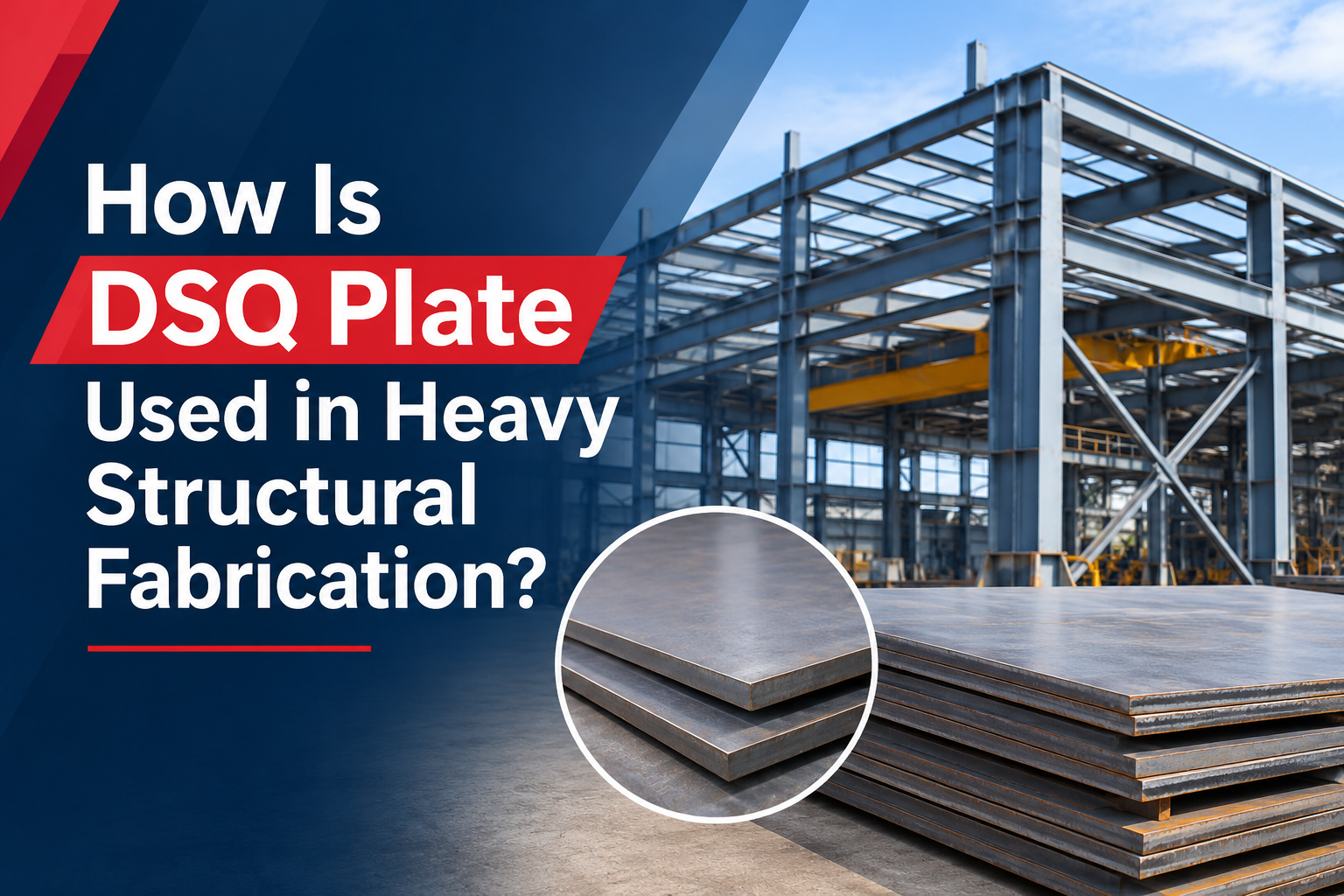
DSQ plate works in heavy structural fabrication as a forming grade, pressed, rolled and welded into kettles, tanks, ducts and large plate assemblies. Heavy engineering damages brittle material. Deep bends, long weld runs and sustained thermal loading all expose the ductility limits of a plate, which is why formability and fabrication performance carry as much weight as tensile strength in these shops. Galvanizing pots, storage vessels, pickling equipment and fabricated housings account for most of its use.
What is a DSQ Plate?
Dead Soft Quality, shortened to DSQ, describes carbon steel plate supplied in its softest practical condition after annealing or controlled rolling. Carbon content stays low, usually below 0.10%, which keeps hardness down and elongation high. The grain structure yields early and deforms evenly instead of tearing at the bend radius. Mills roll DSQ plate for press forming, deep bending and roll shaping rather than load-bearing structural duty, and elongation values above 30% are common. Buyers should confirm chemistry, tensile range and elongation against the mill test certificate, since supply practice varies between mills and between heats of the same nominal grade.
Why Is a DSQ Plate Used in Heavy Structural Fabrication?
Three fabrication properties explain why this grade appears in formed, welded heavy components rather than conventional structural steel plate sections.
Good Formability and Ductility
The plate bends, rolls and presses into tight radii without cracking along the outer fibre. Low carbon keeps work hardening slow. Components that need controlled deformation, such as dished ends and curved kettle walls, hold their formed geometry once the press releases.
Welding and Assembly Suitability
Low carbon equivalent values reduce the risk of hardening and cracking in the heat-affected zone, which suits the long welded seams found on kettles and tanks. Fabricators still need qualified procedures, matched consumables and proper edge preparation for full penetration joints.
Fabrication Flexibility
Soft material cuts cleanly by plasma, oxy-fuel, or shearing, and drills without heavy tool wear. Machining and surface finishing proceed at normal feed rates. Complex assemblies built from several formed sections come together with fewer dimensional rejections at the fit-up stage.
Major Applications of DSQ Plate in Heavy Fabrication
Four application groups account for most DSQ plate consumption across chemical, metallurgical, storage and general process plant fabrication work.
Galvanizing Kettles and Pots
Hot-dip galvanizing kettles take the largest share. Zinc baths run between 440°C and 460°C, so the plate needs low silicon chemistry, tight dimensional accuracy and welded corners that survive repeated thermal cycling without distortion.
Industrial Tanks and Storage Equipment
Storage vessels use rolled shell courses and formed dished ends welded into closed tanks. Compatibility with the stored substance governs the choice here, since bare dead soft quality plate carries no inherent corrosion resistance of its own.
Chemical Processing and Pickling Equipment
Pickling tanks, fume ducts and selected process vessels use formed sections of this grade where lining or coating handles the acid exposure. Engineers must evaluate corrosion rates and protective systems before specifying uncoated steel.
Ducts, Covers, and Equipment Housings
Ducting runs, access covers and machinery enclosures rely on the grade for press-braked panels and rolled sections. Plate thickness, width availability and bend allowances shape the design well before fabrication drawings get released.
Key Factors to Consider When Selecting a DSQ Plate
Four variables decide whether a plate performs in service, and each one deserves checking before the purchase order goes out.
-
Required thickness, width, length and tolerance limits must match the formed component geometry and the capacity of the available press and rolling equipment.
-
Material grade, carbon content, tensile strength and elongation values should be read from the mill certificate rather than assumed from a general supply description.
-
Operating temperature, chemical exposure, loading pattern and service environment together determine whether bare steel, a coated surface or a different alloy suits the duty.
-
Applicable specifications, mill test certificates and third-party inspection requirements need agreement with the supplier before dispatch rather than after delivery.
How is the DSQ Plate Processed During Fabrication?
Fabrication begins with material inspection, where the shop verifies heat numbers, plate identification and certificate data against the approved drawing. Cutting follows, by plasma, oxy-fuel, or shearing, with edges ground square for welding. Rolling and press braking then produce the shells, dished ends and panels, each checked against templates. Welders assemble the formed sections using qualified procedures, often with controlled sequencing to limit distortion. Dimensional inspection closes the process, covering flatness, squareness, weld soundness and overall geometry before the assembly moves to surface treatment, protective coating or final dispatch.
Common Mistakes to Avoid When Using DSQ Plate
Five recurring errors cause scrap, rework and premature failure in heavy fabricated components made from this particular forming grade.
-
Selecting a plate on thickness alone ignores chemistry and mechanical properties, which together decide how the material behaves under forming and welding.
-
Assuming the grade resists corrosion leads to early failure in acidic or chloride service, where a protective coating, rubber lining or alternative alloy remains necessary for service life.
-
Ignoring minimum bend radius and forming limits produces cracking along the outer surface, particularly on thicker plate taken to tight radii against the rolling direction.
-
Applying welding procedures written for structural grades introduces distortion, residual stress and weak joints across large formed assemblies and long continuous seams.
-
Skipping mill test certificates and inspection leaves chemistry, elongation and thickness tolerance unverified until problems surface during fabrication or service.
Conclusion
DSQ plate earns its place in heavy fabrication through formability, weldability and predictable behaviour under shaping operations rather than through strength. Galvanizing kettles, tanks, pickling equipment and formed housings all depend on those traits. Material compatibility, fabrication method and service conditions decide suitability, so verify the full material specification and the mill test certificate before procurement and fabrication begin.

 English
 Arabic
 French
 Spanish
 Portuguese
 Deutsch
 Turkish
 Dutch
 Russian
 Romaian
 Portuguese (Brazil)
 Greek
