


Furnace Repair or Replace? How to Decide Before Winter Hits
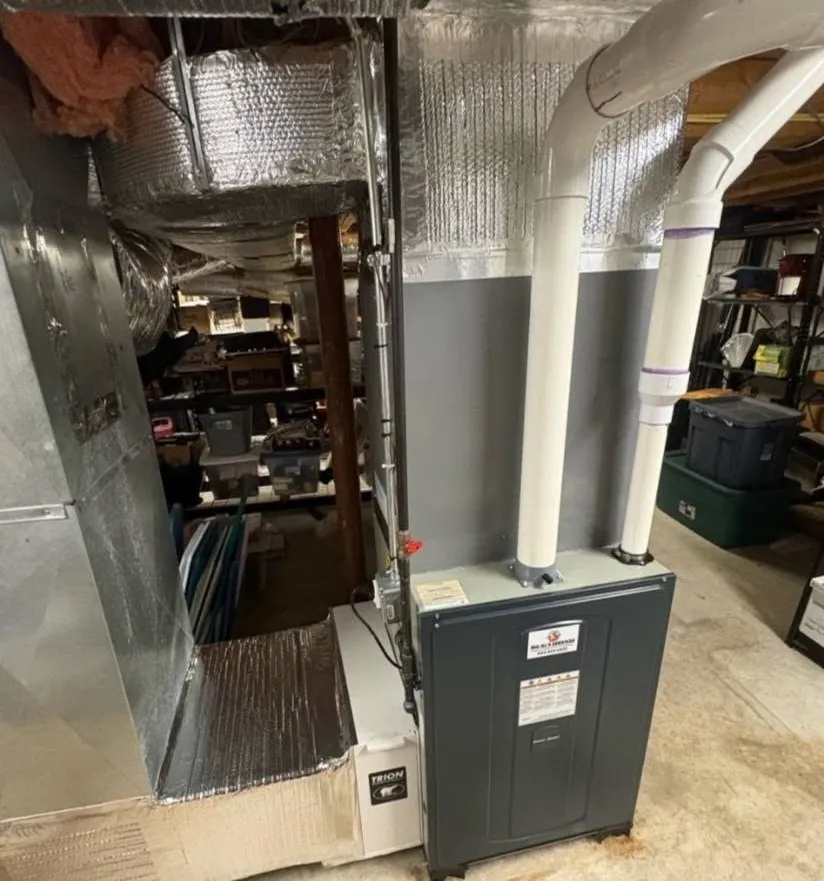
Repair your furnace if it is fairly young, the problem is a single part, and the fix costs well below the price of a new system. Replace it if the furnace is old, breaks down often, runs unevenly or has a safety problem like a cracked heat exchanger. A common rule of thumb is that if a repair costs close to half the price of a new furnace, put that money toward a new one instead.
Most homeowners face this choice in the middle of a cold week, when the heat stops. It is easier to decide before that happens. If you are weighing furnace replacement in Plaistow, NH, this guide gives you a simple way to compare your options, plus the signs that tell you which way to go. It also covers what a replacement involves, so there are no surprises on installation day.
How Old Is Too Old for a Furnace?
Age is the first number to check. Many furnaces last roughly 15 to 20 years, and the exact range depends on the model, the fuel and how well it was maintained. Find the age on the data plate inside the cabinet or in your install paperwork.
Use this as a quick guide:
- Under 10 years old: repair is usually the better choice for a single failed part.
- 10 to 15 years old: weigh the repair cost, the repair history and the efficiency of the unit.
- 15 years or older: start planning for replacement, even if it still runs.
Age alone does not decide it. A well-kept older furnace can outlast a neglected newer one. That is why the repair history matters as much as the date on the label. A 12 year old furnace that has needed three repairs is a different case from a 12 year old furnace that has never failed, and a technician can tell you which one you own.
What Signs Point to Replacement?
If you notice several of these, replacement deserves a serious look:
- Repeated repairs. You have called for service more than once in a short period.
- Rising fuel bills. Your usage climbs and nothing else in the house has changed.
- Uneven heat. Some rooms stay cold while others overheat.
- Louder operation. Banging, rattling, squealing or constant cycling is new.
- Visible rust, soot or corrosion on or around the furnace.
- A cracked heat exchanger. This is a safety problem, and the fix is usually replacement.
- Yellow or flickering flame on a furnace that used to burn clean.
If a carbon monoxide alarm sounds, leave the house first and call 911. Then have the system inspected before it runs again.
When Does Repair Make More Sense?
Repair is often the smart move when the furnace is otherwise in good shape. These are common cases:
- A worn igniter, flame sensor or thermostat problem.
- A dirty filter or blower issue.
- A clogged burner or a minor combustion adjustment.
- A single failed part on a furnace under about 10 years old.
In these cases, a clean repair can bring the system back without a large expense. Ask the technician whether the problem is likely to come back.
How Can You Compare Repair and Replacement Costs?
Do not decide from one number. Compare these items side by side:
- The repair quote. Get it in writing, with the part and labor listed.
- The furnace's age. Older units are more likely to need more repairs soon.
- The repair history. Note what has failed in the last two or three years.
- Your current fuel use. A newer high-efficiency furnace may use less fuel for the same comfort.
- The cost of a replacement. Ask for a quote now, so you have a number to compare against.
If the repair is close to half of the replacement price, replacement usually deserves the money.
What Does Furnace Replacement Involve?
The process is more straightforward than most homeowners expect. A typical job follows these steps:
- Home assessment. A technician reviews the house, the existing furnace, the venting and the ductwork.
- Sizing. The new furnace is matched to the home so it is neither too large nor too small.
- Quote and options. You see the choices and what each one costs.
- Removal of the old unit. The old furnace is disconnected and taken out.
- Installation and testing. The new furnace is installed, tested and checked for safe operation.
Most furnace installations are finished in a single day, which means you are not without heat for long.
Should You Replace Before It Fails?
Planned replacement has real advantages over an emergency one:
- You choose the equipment instead of taking whatever is available.
- You can schedule the work for a convenient day.
- You avoid being without heat on the coldest night of the year.
- You have time to compare quotes and ask questions.
An emergency replacement can still be done well. It just gives you less room to think.
How Can You Extend the Life of Your Current Furnace?
If you decide to keep it for now, a few habits help:
- Change or clean the filter on the manufacturer's schedule.
- Keep vents and returns clear of furniture and rugs.
- Schedule a tune-up every year before the heating season.
- Test your carbon monoxide detectors.
- Call for service at the first sign of a problem rather than waiting.
Why Do Plaistow Homeowners Call Big Al's Services?
As a local heating and cooling contractor, Big Al's Services serves homeowners in Plaistow, NH, and nearby towns like Atkinson, Hampstead and Kingston. We hold BBB A+ accreditation and offer 24/7 emergency service. Our technicians are licensed and insured, and we handle furnace repair, furnace replacement and routine maintenance.
When you call, you can expect:
- An honest look at the furnace's condition.
- A clear comparison of repair and replacement.
- A written quote before any work begins.
FAQ
How do I know if my furnace needs repair or replacement?
Check its age, how often it has failed and how much the repair costs. An older furnace with repeated breakdowns or a safety issue usually points to replacement. A single failed part on a younger furnace usually points to repair.
How long does a furnace last?
Many furnaces last roughly 15 to 20 years, depending on the model and how well it is maintained.
Is it worth repairing a furnace that is 15 years old?
It can be, if the repair is small and the furnace has been reliable. If the repair is costly or the furnace has failed repeatedly, replacement is usually the better use of the money.
How long does furnace replacement take?
Most installations are completed in a single day, though the exact time depends on the home and the system.
Can I replace my furnace in the winter?
Yes. Furnace replacement can be done in cold weather, and many homeowners have no choice. Planning ahead gives you more options.

 English
 Arabic
 French
 Spanish
 Portuguese
 Deutsch
 Turkish
 Dutch
 Italiano
 Russian
 Romaian
 Portuguese (Brazil)
