


A Closer Look at Hydraulic Clutch Release Bearing Design
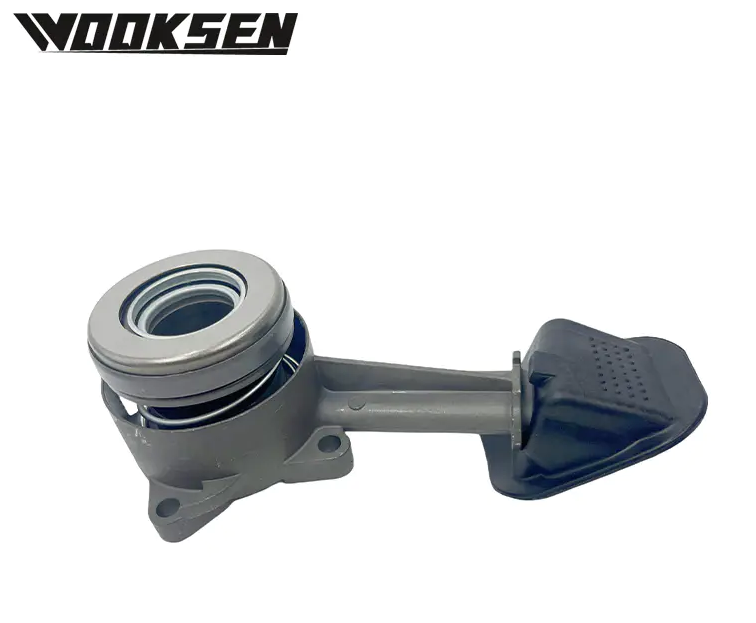
A clutch pedal may look like a simple control, but pressing it activates a series of mechanical and hydraulic movements inside the vehicle. The hydraulic clutch release bearing plays an important role in this process. By combining a release bearing and hydraulic actuation structure, it transfers hydraulic pressure into the movement needed to disengage the clutch. This integrated design has become a relevant product category for automotive component manufacturers and transmission parts suppliers.
In a conventional clutch system, the release bearing moves along the transmission input shaft and presses against the diaphragm spring of the pressure plate. A hydraulic version performs the same basic release function, but its movement is controlled through hydraulic pressure rather than a conventional external release fork arrangement.
The hydraulic clutch release bearing is generally installed concentrically around the transmission input shaft. Its internal cylinder receives hydraulic fluid from the clutch master cylinder. When the clutch pedal is pressed, fluid pressure pushes the piston forward, moving the release bearing toward the pressure plate. Once the diaphragm spring is activated, the clutch disc is released from its clamped position.
This integrated arrangement can simplify the overall clutch actuation layout. Traditional systems may require a separate slave cylinder, release fork, pivot, and linkage components. A concentric hydraulic unit brings several functions into one assembly, helping manufacturers arrange clutch components within limited transmission housing space.
Different designs can vary in construction and dimensions. Some hydraulic clutch release bearings use aluminum housings, while others incorporate engineering plastic components. Bearing types, piston diameters, sealing structures, and fluid inlet positions may also differ. These details are determined according to the vehicle's clutch design and transmission configuration.
The sealing system deserves particular attention because hydraulic pressure must remain contained during operation. Seals are positioned between moving and stationary components to control fluid movement within the cylinder. The bearing section also needs to accommodate contact against the rotating diaphragm spring while allowing axial movement.
Manufacturers can develop variations around cylinder housing geometry, piston travel, bearing dimensions, seal materials, and connection structures. Some buyers require a complete concentric slave cylinder assembly, while others source selected components for specific aftermarket applications. Technical drawings and original samples can help clarify the required structure during product development.
Hydraulic clutch release bearings are used in various manual transmission applications, including passenger vehicles, vans, and commercial transportation equipment. Their integrated construction makes them an important part of clutch system packaging and operation.

 English
 Arabic
 French
 Spanish
 Portuguese
 Deutsch
 Turkish
 Dutch
 Italiano
 Russian
 Romaian
 Greek
