


Airport IoT Market: Enhancing Passenger Experiences Through Connectivity
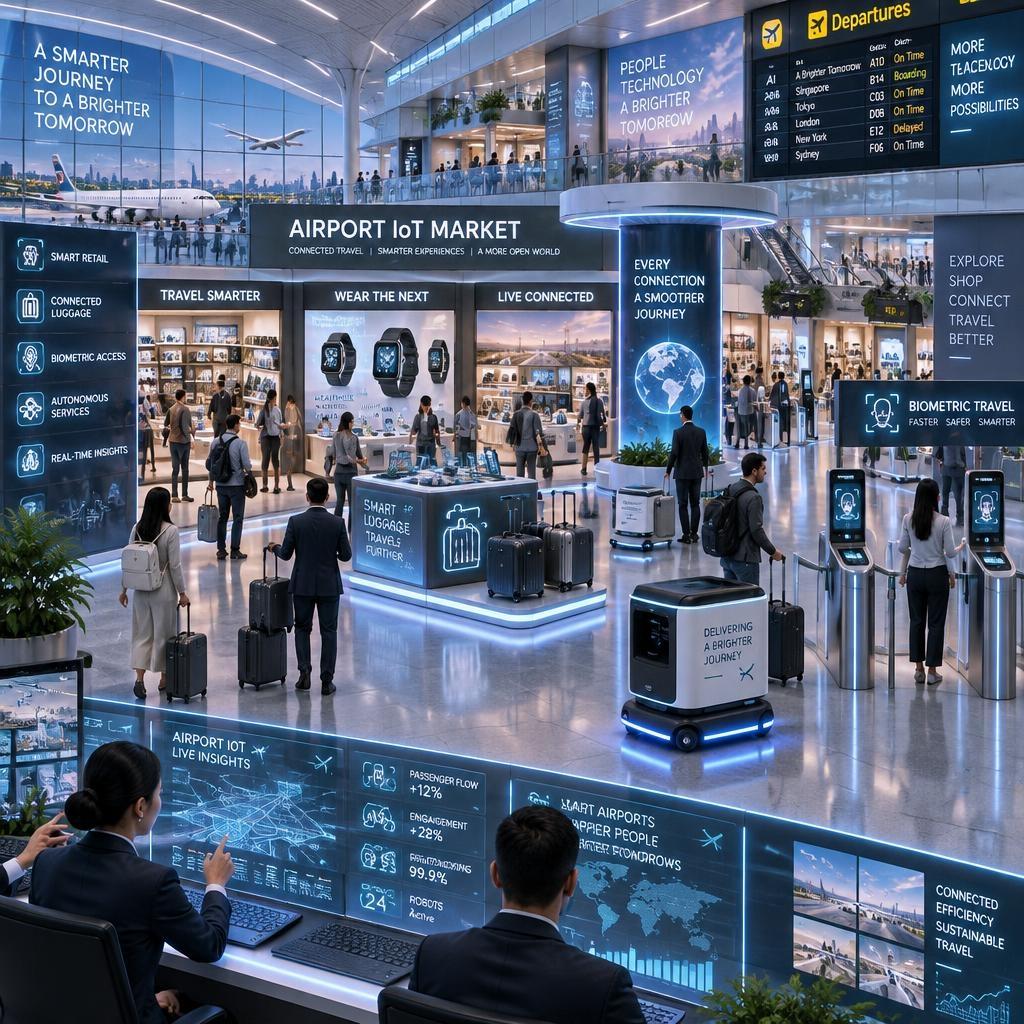
Modern travelers increasingly expect convenient, comfortable, and digitally connected airport experiences. Airport authorities are exploring innovative technologies that simplify passenger journeys and improve access to essential travel services. The Airport IoT Market supports these developments through connected devices, intelligent information platforms, and automated facility management systems. These technologies offer opportunities to reduce inconvenience while supporting more accessible and organized airport environments.
The increasing demand for connected airport passenger technologies reflects changing expectations across the aviation hospitality industry. IoT-enabled infrastructure can support digital navigation, automated baggage information, intelligent waiting area management, and real-time service updates. Technology developers are focusing on accessible interfaces and dependable connectivity to help airport operators provide more convenient services throughout the passenger journey.
Growing Demand for Seamless Airport Experiences
Passengers frequently encounter challenges associated with unfamiliar terminal layouts, extended waiting periods, and changing flight schedules.
Connected airport technologies can provide relevant information that helps travelers organize their journeys more effectively.
Digital displays and authorized mobile applications may communicate information concerning departure gates, available facilities, and service locations.
Airport operators must ensure that information remains accurate, accessible, and available to passengers with different technical abilities.
Creating seamless travel experiences requires coordination between airport authorities, airline operators, and digital technology providers.
Intelligent Airport Navigation Systems
Large airport terminals can be difficult to navigate, particularly for international travelers and individuals visiting unfamiliar destinations.
IoT-enabled navigation platforms can complement traditional airport signage by providing relevant digital directional information.
Passengers may use compatible applications or interactive displays to locate departure gates, restaurants, accessibility services, and other airport amenities.
Technology providers should consider multilingual accessibility and the requirements of passengers with reduced mobility.
Dependable navigation services can help travelers manage their available time and reduce unnecessary confusion within airport environments.
Connected Baggage Management Solutions
Baggage handling represents an important component of the passenger experience.
Connected baggage management systems can support authorized information collection and improve visibility across relevant baggage processing activities.
Passengers may benefit from accessible updates concerning baggage acceptance, transfer, or collection when these services are supported by airport and airline infrastructure.
Airport authorities must ensure that connected baggage technologies remain compatible with established operational systems.
Reliable information management and appropriate technical support are essential for maintaining dependable baggage services.
Improving Passenger Queue Management
Extended waiting periods can affect passenger satisfaction and create operational challenges for airport authorities.
IoT-enabled monitoring platforms may provide authorized personnel with information concerning facility occupancy and passenger movement patterns.
Airport operators can use aggregated information to evaluate staffing requirements and understand service demand across different terminal areas.
Responsible implementation requires careful consideration of passenger privacy and applicable information governance requirements.
Effective queue management should combine digital insights with appropriate customer assistance and operational planning.
Supporting Personalized Digital Airport Services
Connected airport infrastructure creates opportunities for delivering relevant travel information according to passenger preferences.
Digital platforms may provide optional notifications concerning available facilities, flight information, and airport hospitality services.
Personalized services should remain transparent and provide appropriate controls over customer information.
Technology developers must ensure that passengers can access essential airport information without unnecessary registration requirements.
Airport authorities should also maintain conventional assistance channels for travelers who do not use connected applications.
Future Outlook for Connected Passenger Experiences
The Airport IoT Market presents opportunities for continued innovation in digital hospitality, passenger navigation, connected baggage services, and intelligent facility management.
Future technologies may emphasize accessible interfaces, integrated information platforms, and responsible personalization.
Airport operators considering connected passenger services must evaluate infrastructure compatibility, customer expectations, cybersecurity requirements, and long-term financial commitments.
Collaboration between airlines, airport authorities, software developers, and hospitality providers can encourage practical improvements in passenger experiences.
As traveler expectations continue evolving, connected technologies may become increasingly important within modern airport environments.
By prioritizing accessibility, service reliability, and responsible information management, technology providers can contribute to more convenient and passenger-focused aviation experiences.
FAQs
How does IoT improve airport passenger experiences?
IoT can improve passenger experiences through digital navigation, connected baggage information, automated service updates, intelligent queue management, and accessible travel information.
What are connected airport passenger technologies?
Connected passenger technologies include IoT-enabled information displays, navigation platforms, baggage monitoring systems, digital applications, and other technologies supporting convenient airport travel.

 English
 Arabic
 French
 Spanish
 Portuguese
 Deutsch
 Turkish
 Dutch
 Italiano
 Russian
 Portuguese (Brazil)
 Greek
