


Corrugated Pipe Machine: Guide to High-Speed Extrusion And Manufacturing
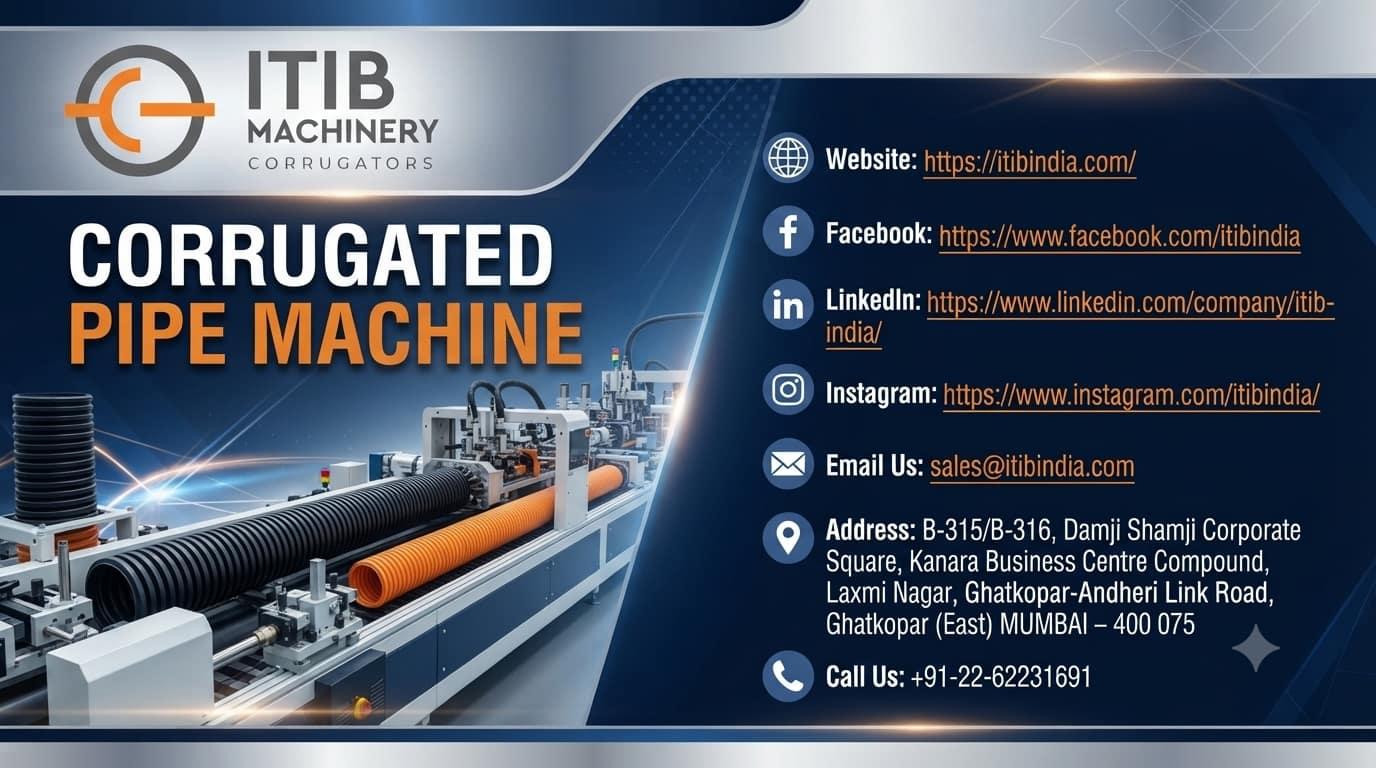
A corrugated pipe machine is a specialized extrusion line designed to manufacture flexible or semi-rigid pipes with alternating ridges and valleys along their outer or inner walls. This rib-like profile gives corrugated pipes high ring stiffness and crush resistance while keeping material weight low—making them essential for underground cable protection, drainage, sewage, agricultural irrigation, and automotive fluid lines.
Whether you are setting up a new plant or upgrading an existing extrusion line, understanding how a corrugated pipe machine works and what features matter most will help you choose equipment that balances output, dimensional accuracy, and operating cost.
How a Corrugated Pipe Machine Works
Most industrial corrugated pipe lines use continuous vacuum or pressure forming technology paired with a single-screw or twin-screw extruder. The process turns raw polymer granules into finished coiled or straight pipes in one synchronized line.
- Material feeding and plasticizing: Polymers such as HDPE, PP, PVC, or PA are dried, metered, and melted inside a temperature-controlled extruder barrel to achieve uniform viscosity.
- Die head shaping: The molten polymer passes through a precision extrusion die into a moving mold block tunnel (the corrugator).
- Corrugation forming: Mold blocks travel in pairs along a track; vacuum suction or internal air pressure presses the hot melt tightly against the mold grooves to create uniform corrugations.
- Cooling and sizing: Air or water cooling solidifies the wall profile quickly so the ribs hold their exact geometry without sagging or ovality.
- Coiling, cutting, and winding: Depending on pipe diameter and application, finished pipes are wound onto spools/coils or cut to length and stacked.
Key Components of the Production Line
A reliable corrugated pipe machine is more than just a corrugator unit—performance depends on tight synchronization across every station.
- Extruder: High-efficiency screw design with zoned PID heating ensures steady melt output and lower energy consumption per kilogram.
- Corrugator and mold blocks: Precision-machined aluminum or steel mold blocks determine corrugation pitch, wall thickness, and ring stiffness class.
- Vacuum/pressure system: Maintains consistent forming pressure so rib crests and valleys stay sharp and defect-free at higher line speeds.
- Control panel (PLC & HMI): Centralizes temperature zones, line speed ratios, alarm diagnostics, and recipe storage for quick changeovers.
- Winder or cutter: Automates coil tensioning for small/medium conduits or clean cutting for larger drainage and ducting pipes.
Key Factors When Choosing a Machine
Selecting the right corrugated pipe machine starts with matching equipment capacity to your target pipe diameters, resins, and market standards.
- Pipe diameter and wall profile: Confirm the minimum and maximum outer diameter range, plus whether you need single-wall or double-wall corrugated pipes.
- Compatible raw materials: HDPE and PP are standard for cable ducts and drainage, while specialized resins suit automotive or high-temperature conduits.
- Production speed and output: Evaluate real-world kg/hr throughput alongside mold block cooling efficiency, not just peak extruder RPM.
- Automation and changeover time: Look for quick-swap mold blocks, automatic winding, and intuitive PLC controls to cut downtime between orders.
- After-sales and spare parts: Reliable access to mold blocks, heaters, sensors, and technician support protects your uptime during peak demand.
Frequently Asked Questions
What materials can a corrugated pipe machine process?
Common materials include HDPE, PP, PVC, and PA (nylon), depending on the extruder screw geometry, heating zones, and whether the pipe is meant for electrical conduit, drainage, or automotive applications.
What is the difference between single-wall and double-wall corrugated pipes?
Single-wall corrugated pipes have a corrugated exterior and a corrugated interior, making them lightweight and flexible for coils and conduits. Double-wall pipes combine a corrugated outer wall for high ring stiffness with a smooth inner wall for lower flow friction in drainage and sewer lines.
How is pipe quality measured in corrugated pipe production?
Manufacturers typically check ring stiffness (resistance to external soil or traffic load), outer/inner diameter tolerances, wall thickness distribution, impact resistance, and surface smoothness free of bubbles or burn marks.
Can one corrugated pipe machine produce multiple pipe sizes?
Yes, most lines support a range of sizes by changing the die tooling corrugated pipe machine and swapping the corresponding mold blocks in the corrugator, provided the pipe diameters fall within the machine's rated capacity.
Follow Us On Social Media Links:-
Follow Us On Facebook:- https://www.facebook.com/itibindia
Follow Us On Linkedin:- https://www.linkedin.com/company/itib-india/
Follow Us On Instagram:- https://www.instagram.com/itibindia/
Add:- B-315/B-316, DamjiShamji Corporate Square, Kanara Business Centre Compound, Laxmi Nagar, Ghatkopar-Andheri Link Road,Ghatkopar (East) MUMBAI – 400 075
Phone: 91-22-62231691
Email: sales@itibindia.com

 English
 Arabic
 French
 Spanish
 Portuguese
 Deutsch
 Turkish
 Dutch
 Italiano
 Russian
 Romaian
 Greek
