


The Hidden Safety Factor Indonesian Hospitals Should Consider When Sourcing Laparoscopic Instruments
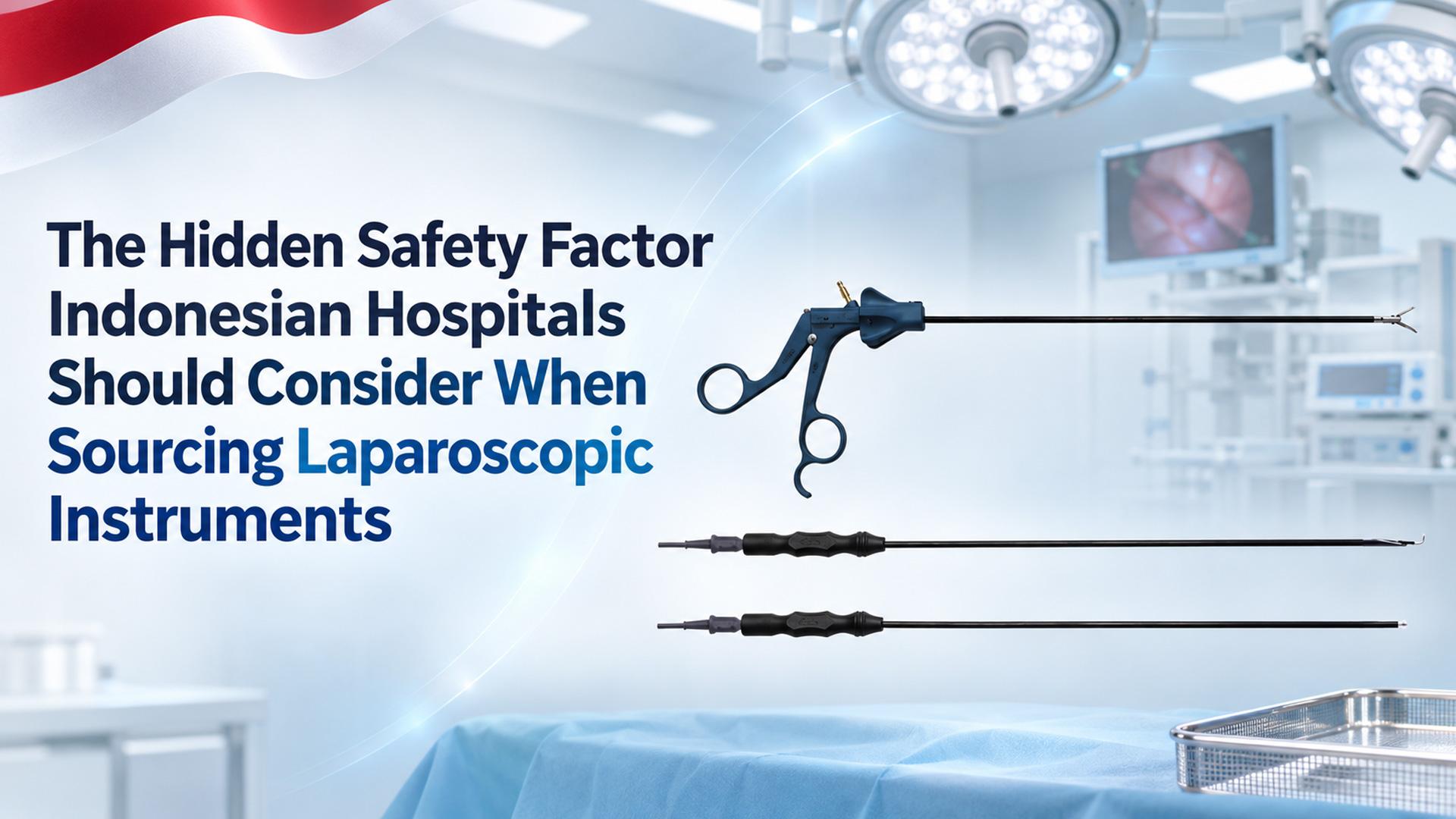
When hospitals evaluate laparoscopic surgical instruments, attention naturally turns to the working tip, handling characteristics and dimensions. These features are important, but they do not tell the complete story for electrosurgical instruments. A less visible consideration is the condition and construction of the electrical insulation that separates an instrument's active conductor from surrounding tissue.
For Indonesian hospital procurement teams, understanding laparoscopic instrument insulation can help improve product evaluation and communication between operating theatre personnel, central sterile services and biomedical engineering departments.
The issue deserves attention because part of an electrosurgical laparoscopic instrument may operate outside the surgeon's direct view. Undetected insulation defects can create risks that are not immediately apparent during a procedure.
Why Laparoscopic Electrosurgery Requires Special Attention
Minimally invasive surgery involves instruments introduced through access ports, with the surgeon working from a camera view rather than seeing every portion of the instrument directly.
Electrosurgical laparoscopic devices introduce additional electrical considerations. In a monopolar system, energy is delivered through an active instrument and returns through the appropriate patient return pathway. Insulation helps confine electrical activity to the intended working area of the instrument.
If the insulation becomes damaged, unintended current pathways may develop. Depending on the circumstances, these can cause injury to tissue outside the area being intentionally treated.
This is one reason that product selection, equipment compatibility and routine instrument condition assessment should be considered together.
Three Electrosurgical Hazards That Should Not Be Confused
Different mechanisms can contribute to unintended electrical energy transfer during laparoscopic procedures.
Insulation Failure
Insulation failure refers to damage or deterioration of the material intended to electrically separate an active conductor from its surroundings.
Defects may develop through mechanical stress, damage during handling, inappropriate processing or other causes. Some problems can be identified visually, while others may require suitable integrity testing.
Direct Coupling
Direct coupling can occur when an active electrosurgical instrument contacts another conductive instrument and transfers energy through that contact.
This mechanism differs from insulation failure and requires appropriate clinical equipment use and safety practices.
Capacitive Coupling
Capacitive coupling involves electrical energy transfer through a capacitive relationship between conductive components.
It can occur even when an instrument's insulation remains intact. Therefore, an instrument that passes an insulation check is not automatically free from every electrosurgical hazard.
These distinctions are important because different hazards require different forms of prevention and control.
What Published Research Tells Us
Insulation damage is a recognized concern in laparoscopic electrosurgery rather than a hypothetical equipment problem.
A study presented in the Society of American Gastrointestinal and Endoscopic Surgeons (SAGES) abstract archive examined insulation failures in reusable and disposable laparoscopic instruments.
The investigation reported insulation defects in the instruments evaluated and highlighted the importance of inspecting devices for insulation integrity.
The findings should not be interpreted as current failure rates for all hospitals or instrument manufacturers. They demonstrate the relevance of the hazard and the need for product-appropriate inspection programmes.
Why Visual Inspection Alone May Be Insufficient
Visible cracks, damaged surfaces and obvious defects should prompt further assessment. However, some insulation damage may be small or difficult to recognize through ordinary visual examination.
Facilities should therefore follow the inspection methods specified in the relevant manufacturer's instructions and their approved institutional procedures.
Where specialized insulation testing is required, it should be performed using appropriate equipment and methods by qualified personnel.
There is no sound basis for applying one arbitrary testing parameter to every laparoscopic instrument. Electrical design, product specifications and applicable procedures must determine the testing approach.
Instruments suspected of having damaged insulation should be withdrawn from use until they have undergone the necessary assessment.
Reusable Instruments Introduce Lifecycle Responsibilities
Reusable laparoscopic instruments undergo repeated cycles of clinical use, transport, cleaning, inspection, packaging and sterilization.
These processes are essential to safe reuse when carried out appropriately, but repeated handling also creates opportunities for mechanical damage.
Hospitals should ensure that reprocessing follows the validated instructions applicable to each product. Instruments with modular components may require additional attention to disassembly, inspection and reassembly.
It is also important to keep product identification and service records sufficiently clear to determine whether an instrument remains suitable for use.
Procurement Decisions Can Influence Maintenance Quality
Although insulation condition is often discussed as a maintenance issue, purchasing teams play an important role before the instrument enters clinical service.
Product selection should consider whether suitable technical documentation is available, including the intended electrical configuration, relevant dimensions, compatible equipment and processing instructions.
For example, an L-hook laparoscopic electrode and a ball electrode may differ in their working-tip geometry, connector arrangement and documented configurations.
A distributor should not treat these as interchangeable simply because both belong to a laparoscopic electrode category.
The laparoscopic electrode range from Electro Range MFG Co. illustrates how different working-tip and connection options can be listed as separate product references.
Accurate product identification makes it easier for healthcare facilities to obtain the appropriate instructions and maintain records for the instruments they actually use.
Better Coordination Between Hospital Departments
Electrosurgical instrument management involves more than one department.
Operating theatre staff may identify changes in instrument handling or visible damage during use. Central sterile services personnel assess instrument condition during processing, while biomedical engineering teams may support technical evaluation and testing.
Procurement teams are responsible for ensuring that replacement products match the approved requirements.
Information needs to move between these functions. A damaged instrument should not return to active inventory because one department was unaware of a problem identified elsewhere.
How Distributors Can Support More Informed Purchasing
Indonesian distributors can support hospital procurement by maintaining accurate instrument descriptions and providing model-specific documentation where available.
Relevant purchasing information includes:
|
Product Information |
Why It Matters |
|---|---|
|
Instrument model and intended use |
Identifies the required product configuration |
|
Electrical system |
Distinguishes monopolar, bipolar and non-electrosurgical instruments |
|
Insulation and construction |
Supports technical review of the instrument design |
|
Cable and generator compatibility |
Supports correct equipment selection |
|
Reprocessing instructions |
Guides appropriate handling of reusable devices |
|
Inspection requirements |
Supports hospital maintenance and quality procedures |
A technically well-described instrument is easier to evaluate than a product identified only by its appearance or a broad marketing claim.
Frequently Asked Questions
Can insulation failure occur without visible damage?
Yes. Some defects may not be apparent during ordinary visual inspection. Appropriate testing may be required according to the product instructions and institutional procedures.
Does intact insulation eliminate every electrosurgical risk?
No. Direct and capacitive coupling are distinct mechanisms that must also be addressed through appropriate equipment configuration and clinical practices.
Do reusable laparoscopic instruments all require the same maintenance procedures?
No. Inspection, processing and testing requirements depend on the instrument's design and the applicable manufacturer instructions.
Conclusion
Laparoscopic insulation safety deserves attention throughout the instrument's working life, beginning with product evaluation and continuing through clinical use, reprocessing, inspection and eventual replacement.
For Indonesian hospitals and distributors, sound procurement involves more than selecting the correct working tip. It requires appropriate technical information, compatible equipment and a clear understanding of the responsibilities associated with electrosurgical instruments.
Maintaining that wider perspective supports more informed purchasing and safer instrument-management practices.

 English
 Arabic
 French
 Spanish
 Portuguese
 Deutsch
 Turkish
 Italiano
 Russian
 Romaian
 Portuguese (Brazil)
 Greek
