


Strategic Business Insights: Navigating the Complexities of Distribution, Partnership, and Consumer Engagement in the Smart Home Sector
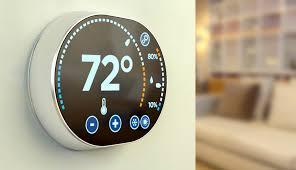
For businesses operating within the smart home space, success is determined by more than just having a great product; it requires a sophisticated understanding of distribution channels and partnership ecosystems. The journey from the factory to the living room wall involves a mix of online retail, big-box home improvement stores, and professional HVAC distributors. Each of these channels requires a different marketing approach and pricing strategy. Furthermore, partnerships with insurance companies and utility providers are becoming a major driver of volume. Many insurance firms now offer discounts for homes equipped with smart sensors that can detect freezing pipes (via low-temperature alerts), while utilities often provide the devices at a steep discount to participants in their energy-saving programs. These B2B2C (Business to Business to Consumer) models are essential for reaching the mass market and overcoming the initial cost barrier that some consumers face.
Engaging the consumer also requires a focus on long-term support and software reliability. Unlike a traditional "set it and forget it" thermostat, a smart device is a living product that requires regular updates to stay secure and functional. Companies that invest in robust customer support and intuitive app updates tend to see much higher referral rates and brand loyalty. The business of smart climate control is increasingly becoming a service industry, where the hardware is simply the gateway to a long-term relationship with the user. To gain a better perspective on these operational strategies and the evolving business models within the industry, reviewing Smart Thermostat Market Business Insights is highly recommended. These insights provide a roadmap for navigating the competitive pressures and regulatory requirements that define the current marketplace, helping companies to find sustainable paths to growth and profitability.
Will a smart thermostat work with my heat pump? Most do, but heat pumps can be more complex to wire. You should verify that the specific model supports "O/B" wires and multi-stage heating/cooling.
Do I need a hub for my smart thermostat? Many modern thermostats connect directly to your Wi-Fi router, but some still require a proprietary hub or a smart home bridge like those used by Zigbee or Z-Wave systems.
➤➤➤Explore MRFR’s Related Ongoing Coverage In Semiconductor Industry:
Virtual Reality Headsets Market

 English
 Arabic
 Spanish
 Portuguese
 Deutsch
 Turkish
 Dutch
 Italiano
 Russian
 Romaian
 Portuguese (Brazil)
 Greek