


Understanding Batch Processing and Stream Processing
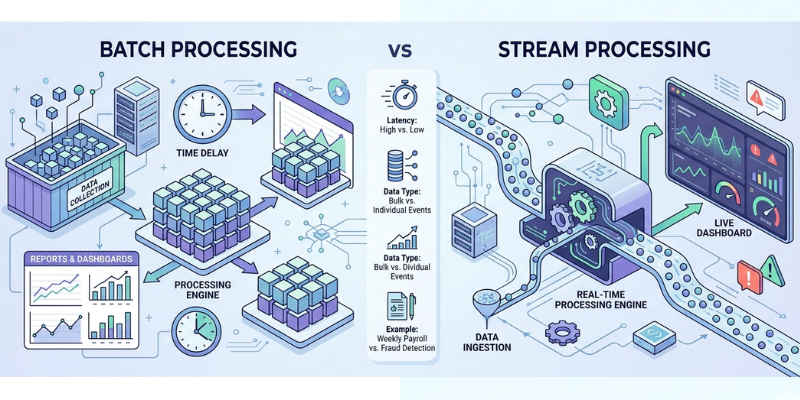
Modern businesses generate huge amounts of data every second. Companies collect information from websites, mobile apps, payment systems, sensors, and social media platforms. To handle this growing flow of information, organizations use different data processing methods. Two of the most common methods are batch processing and stream processing. Understanding these concepts helps beginners build a strong foundation in data science and big data technologies.
Batch processing operates by accumulating data over a span of time and then processing it collectively in sets. Stream processing handles data continuously as it arrives. Both methods are important because they solve different business problems and support different types of applications. If you want to build practical skills in these technologies and understand real industry use cases, you can explore Data Science Courses in Bangalore at FITA Academy to strengthen your learning journey further.
What is Batch Processing
Batch processing refers to a technique where data is collected, stored, and processed at predetermined times. Instead of analyzing information immediately, the system waits until enough data is collected before running the processing task. This method is commonly used in payroll systems, monthly billing reports, and large-scale database updates.
For example, a retail company may collect sales information throughout the day and process it at midnight to generate business reports. This approach helps organizations manage large volumes of data efficiently without putting constant pressure on the system.
One major advantage of batch processing is its ability to handle huge datasets. Since the processing happens at planned times, businesses can optimize system resources and reduce operational costs. Batch processing is also reliable for tasks that do not require instant results.
However, batch processing is not suitable for situations where immediate action is required. If a company needs real-time fraud detection or live customer recommendations, waiting several hours for data processing may create problems.
What is Stream Processing
Stream processing is a modern data handling method where information is processed immediately as it enters the system. Instead of waiting for large data groups, the system continuously analyzes incoming data in real time. This method is beneficial for applications that need quick decisions and real-time updates.
Streaming systems are widely used in online banking, stock market monitoring, ride-sharing applications, and social media platforms. For example, when a user swipes a credit card, the bank can instantly check for suspicious activity through stream processing technology.
One important benefit of stream processing is speed. Businesses can react to changing situations immediately and provide better customer experiences. Real-time monitoring also helps organizations detect system failures, security threats, and customer behavior patterns much faster.
Despite its advantages, stream processing can be more complex to manage. It requires powerful infrastructure and careful system design to handle continuous data flow efficiently. If you are interested in learning how modern organizations build real-time analytics systems and predictive models, consider taking a Data Science Course in Hyderabad to improve your technical understanding in this growing field.
Key Differences Between Batch and Stream Processing
The biggest difference between batch processing and stream processing is timing. Batch processing works on stored data after collection, while stream processing handles data instantly.
Batch processing is ideal for historical analysis and large-scale reporting. It is usually more cost-effective because the system processes data at fixed intervals. Stream processing focuses on speed and immediate decision-making, making it valuable for real-time applications.
Another difference is system complexity. Batch systems are generally easier to build and maintain. Stream processing systems require continuous monitoring and advanced technologies to ensure smooth performance.
Businesses often choose a processing method based on their goals. Some organizations even combine both approaches to balance efficiency and speed.
Why These Concepts Matter in Data Science
Data scientists work with different types of information and business requirements. Understanding when to use batch processing or stream processing helps professionals design better data solutions. These ideas are crucial in areas like artificial intelligence, big data analysis, machine learning, and cloud computing.
As industries continue to rely on faster and smarter systems, professionals with strong knowledge of data processing methods will remain in high demand. Learning these fundamentals can help beginners prepare for real-world projects and future career opportunities. If you plan to expand your expertise in analytics and big data technologies, you can join a Data Science Course in Ahmedabad to continue building practical knowledge with confidence.
Also check: Probability Theory Basics for Data Science

 English
 French
 Spanish
 Portuguese
 Deutsch
 Turkish
 Dutch
Dutch
 Italiano
 Russian
 Romaian
 Portuguese (Brazil)
 Greek
Greek
