


What Fabrication Techniques Work Best for Plastic Sheets?
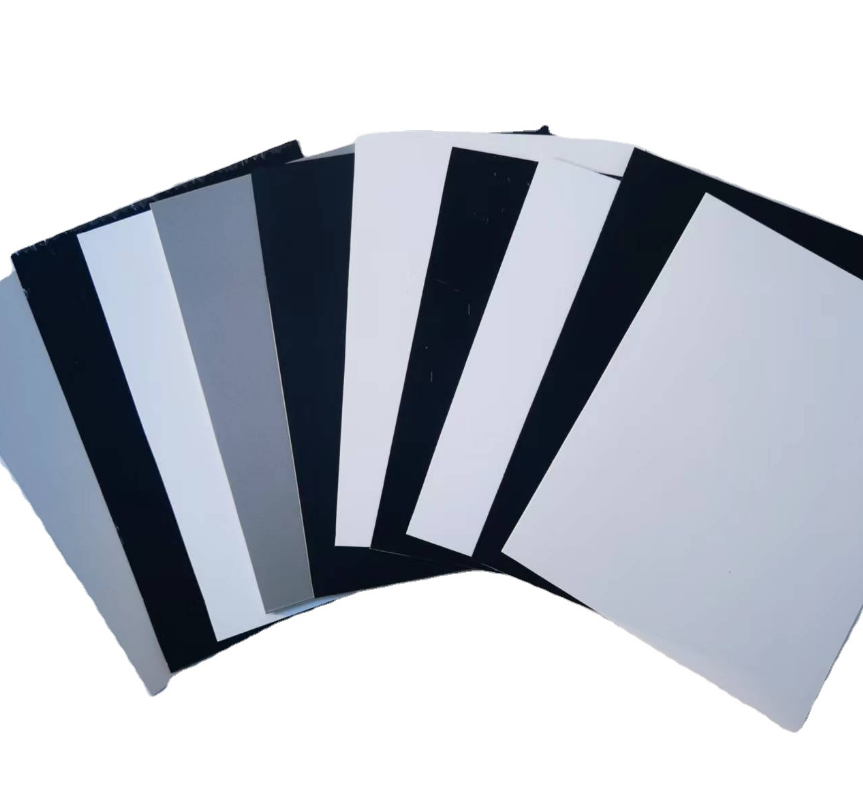
HIPS Sheet and HDPE Sheet are two common thermoplastics widely used for various manufacturing applications. Understanding their machining characteristics is essential for precision fabrication.
HIPS Sheet is appreciated for its ease of cutting, drilling, and thermoforming. Standard thicknesses range from 0.5 mm to 25 mm, with impact-resistant grades often selected for more demanding applications. Its rigidity allows for smooth CNC milling and sawing, producing sharp edges with minimal burr formation. Additionally, HIPS exhibits moderate thermal resistance, with a heat deflection temperature around 90–95°C, which makes it suitable for applications involving moderate heat exposure during fabrication.
HDPE Sheet, by contrast, is known for its toughness and chemical resistance. Available in thicknesses up to 50 mm, HDPE Sheet requires slower machining speeds due to its semi-crystalline structure, which can melt if overheated. Standard densities are 0.93–0.97 g/cm³, and the material demonstrates excellent wear resistance. HDPE is ideal for applications like chemical tanks, protective liners, or food-grade surfaces where moisture and chemical exposure are critical.
Both HIPS Sheet and HDPE Sheet can be thermoformed, though HIPS responds more uniformly due to its amorphous structure, while HDPE requires careful heating to prevent warping. Post-machining finishing, such as sanding and polishing, can also differ. HIPS achieves a high-quality finish quickly, whereas HDPE may require additional smoothing for aesthetic purposes.
Design engineers often select HIPS Sheet when visual quality and easy shaping are priorities. HDPE Sheet is preferred when resistance to chemicals, moisture, and wear is essential. Understanding these material-specific fabrication properties ensures efficient production and reduces material waste, contributing to both cost-effective and high-quality outcomes.

 English
 Arabic
 French
 Spanish
 Portuguese
 Deutsch
 Dutch
Dutch
 Italiano
 Russian
 Romaian
 Portuguese (Brazil)
 Greek
Greek
