


Why Does Your Idle Speed Fluctuate?
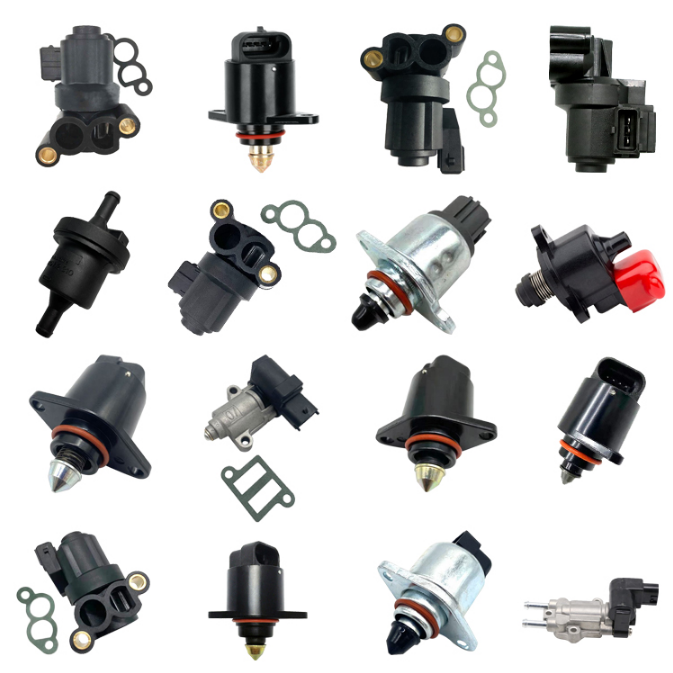
A malfunctioning Idle Air Control Valve produces distinct drivability symptoms that technicians can identify through systematic observation and diagnostic testing. Understanding these failure modes helps distinguish IAC-related issues from vacuum leaks, sensor failures, or fuel system problems.
The most prevalent symptom is erratic idle speed fluctuation, where the tachometer needle oscillates between 500 RPM and 1.500 RPM without driver input. This "hunting" behavior occurs when carbon deposits on the pintle or valve seat prevent smooth linear movement, causing the ECU to overcorrect with repeated stepper motor adjustments. In severe cases, the idle speed may surge above 2.000 RPM immediately after startup or drop below 400 RPM, triggering engine stall at traffic stops.
Engine stalling when decelerating to a stop represents another critical failure indicator. During closed-throttle deceleration, the IAC valve must rapidly transition from a partially open position to maintain minimum airflow. A sticky pintle that fails to extend within 50–100 milliseconds of ECU command allows insufficient bypass air, causing RPM to drop below the stall threshold (typically 300–400 RPM for most engines). This symptom is particularly dangerous in automatic transmission vehicles where the driver expects the engine to remain running when shifting from Drive to Neutral or Park.
Cold-start difficulty constitutes the third major symptom category. During cranking at temperatures below 10°C, the ECU commands maximum IAC opening to achieve an air-fuel ratio of approximately 12.5:1 (richer than the stoichiometric 14.7:1) for reliable ignition. A stuck-closed valve restricts airflow to the base idle passage only—typically 3–5 liters per minute versus the 20–30 L/min required for cold fast-idle—resulting in extended cranking times exceeding 5 seconds or complete failure to start without throttle pedal assistance.
Diagnostic trouble codes (DTCs) provide electronic confirmation of IAC circuit failures. P0505 (Idle Air Control System Malfunction) indicates general circuit or performance issues. P0506 (Idle Air Control System RPM Lower Than Expected) suggests insufficient airflow from a stuck-closed or carbon-fouled valve. P0507 (Idle Air Control System RPM Higher Than Expected) points to excessive bypass air from a stuck-open pintle or vacuum leak downstream of the valve. Technicians should verify these codes with live data stream analysis, monitoring IAC step counts versus actual RPM while applying electrical loads (headlights, A/C compressor, cooling fans) that typically demand an idle speed increase of 100–200 RPM.

 English
 Arabic
 French
 Spanish
 Portuguese
 Deutsch
 Turkish
 Dutch
Dutch
 Italiano
 Russian
 Romaian
 Greek
Greek
