


Reducing Breakage in Metallic Knitted Fabrics
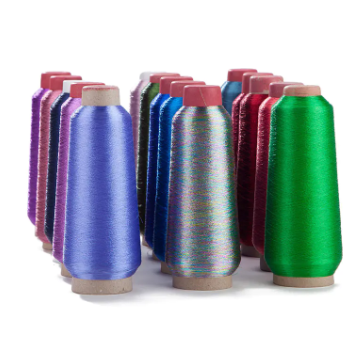
Decorative knitting materials often create production challenges that differ from ordinary cotton or polyester yarns. Manufacturers working with reflective textile surfaces regularly pay attention to yarn tension, machine speed, needle selection, and fabric elasticity. These factors become especially important when producing fabrics with Metallic Yarn for Knitting because metallic components may react differently during loop formation compared with standard spun yarns.
One frequently discussed issue in textile production is yarn breakage. Metallic yarn structures sometimes contain thin metal-coated films that have lower elongation properties than conventional textile fibers. During high-speed knitting, excessive friction or unstable yarn feeding can increase stress on the metallic layer. Textile processing reports suggest that reducing machine tension and optimizing lubrication may improve knitting consistency.
Knitting needle selection also affects final fabric quality. Many factories choose smoother needle surfaces and carefully controlled needle movement to reduce abrasion against reflective yarn components. Fine gauge knitting machines such as 12GG to 16GG systems are commonly used for lightweight metallic fashion fabrics, while heavier decorative fabrics may use lower gauge equipment for more stable loop structures.
Another technical consideration involves yarn blending. Metallic yarn is often combined with soft fibers including viscose, acrylic, nylon, or wool to improve flexibility and wearer comfort. A common blend ratio may include 5% to 20% metallic fiber combined with conventional textile yarns. This approach helps maintain reflective appearance while improving softness and reducing stiffness in finished knitted fabrics.
Textile engineers also analyze stitch geometry because knitted loop behavior directly influences fabric appearance. Research related to knitted fabric mechanics shows that yarn arrangement and loop tension affect elasticity, curling, and dimensional stability. Metallic yarn structures can create different reflection angles depending on stitch density and loop orientation.
Environmental conditions inside knitting workshops may also influence metallic yarn processing. Stable humidity levels are often maintained to reduce static electricity and improve yarn feeding performance. Excessively dry production environments may increase friction and generate inconsistent yarn movement during machine operation.
Fashion brands increasingly use metallic knitted fabrics for evening apparel, winter sweaters, decorative trims, scarves, and accessories. Some sportswear collections also integrate reflective knitting zones for visual styling purposes. Digital knitting systems now allow selective placement of metallic yarn sections without requiring separate embroidery or printing operations.
Although metallic yarn processing requires careful machine adjustment, the material offers strong decorative value and flexible design possibilities. As knitting technology evolves, manufacturers continue developing softer, lighter, and more durable metallic yarn constructions suitable for broader textile applications.

 English
 Arabic
 Spanish
 Portuguese
 Deutsch
 Turkish
 Dutch
Dutch
 Italiano
 Russian
 Romaian
 Portuguese (Brazil)
 Greek
Greek
