


Why Oxford Fabric Performs Well Under Stress Conditions
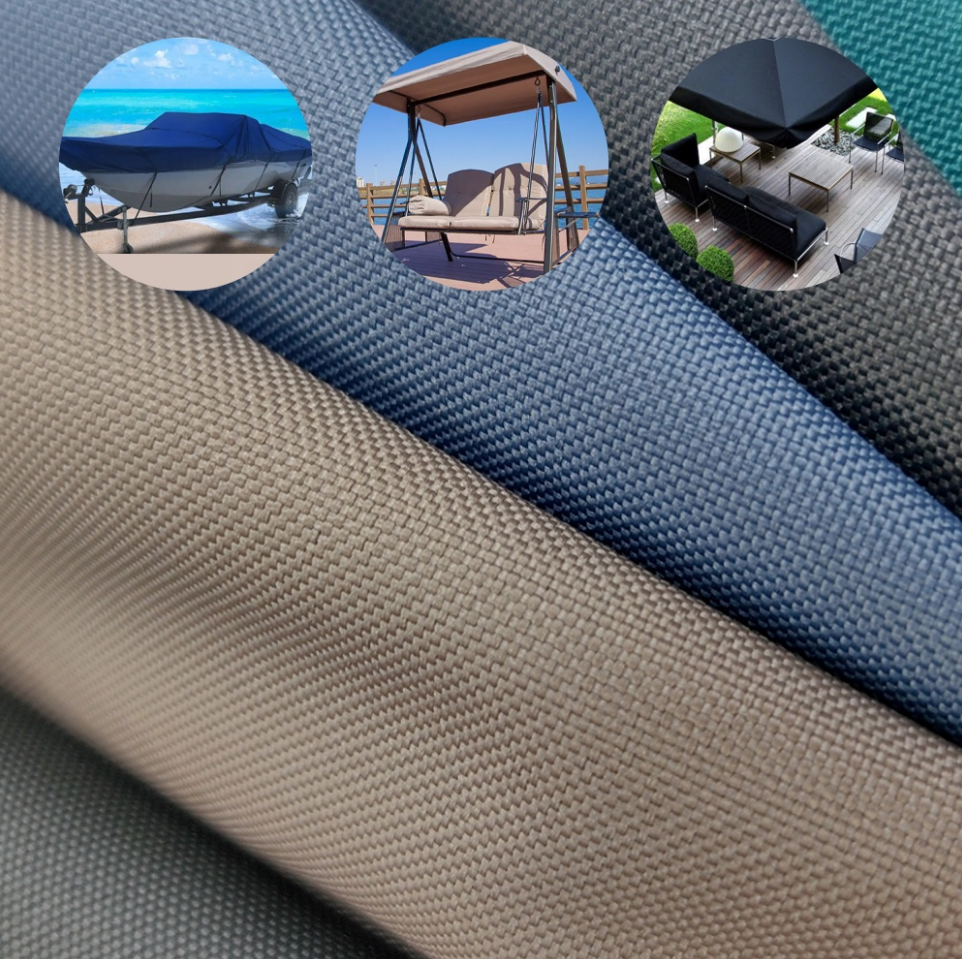
Durability in technical textiles is determined by multiple interacting factors, and Oxford Fabric is a strong example of how material engineering can achieve balanced performance across different conditions.
One of the most important characteristics of Oxford fabric is its abrasion resistance. The basket weave structure provides multiple yarn contact points, allowing friction forces to be distributed across several fibers rather than concentrated on a single strand. This significantly reduces localized wear, especially in high-contact applications such as backpacks and protective covers.
Tensile strength is another defining property. Depending on the fiber composition, polyester-based Oxford fabric typically provides stable elongation control, meaning it resists stretching under load. Nylon variants offer even higher tensile strength-to-weight ratios, making them suitable for demanding outdoor or tactical applications.
Environmental resistance is also critical. While raw woven fabric has limited protection against moisture, coating technologies greatly enhance performance. PU-coated Oxford fabrics can achieve moderate waterproof ratings suitable for rain exposure, while PVC-coated variants provide stronger barrier protection for prolonged outdoor use. TPU laminated versions often offer a balance of waterproofing and flexibility, making them suitable for performance-oriented gear.
UV resistance depends largely on fiber type and finishing. Polyester-based Oxford fabric generally performs better under sunlight exposure compared to natural fibers, maintaining structural integrity over longer periods.
Thermal stability and flame-retardant treatment are also possible through chemical finishing. Some industrial-grade versions are engineered to meet specific safety requirements for controlled environments, though these treatments depend heavily on formulation and washing durability levels.
In practical applications, Oxford Fabric is frequently selected because it allows manufacturers to tune performance characteristics without changing the fundamental production structure. This adaptability reduces cost while maintaining reliable mechanical performance across different product categories.
Overall, the durability of Oxford fabric is not a single property but a combination of weave engineering, fiber selection, and finishing chemistry working together.

 English
 Arabic
 French
 Spanish
 Deutsch
 Turkish
 Dutch
Dutch
 Italiano
 Russian
 Romaian
 Portuguese (Brazil)
 Greek
Greek
