


Why Fiber Choice Matters in Straw Hat Design
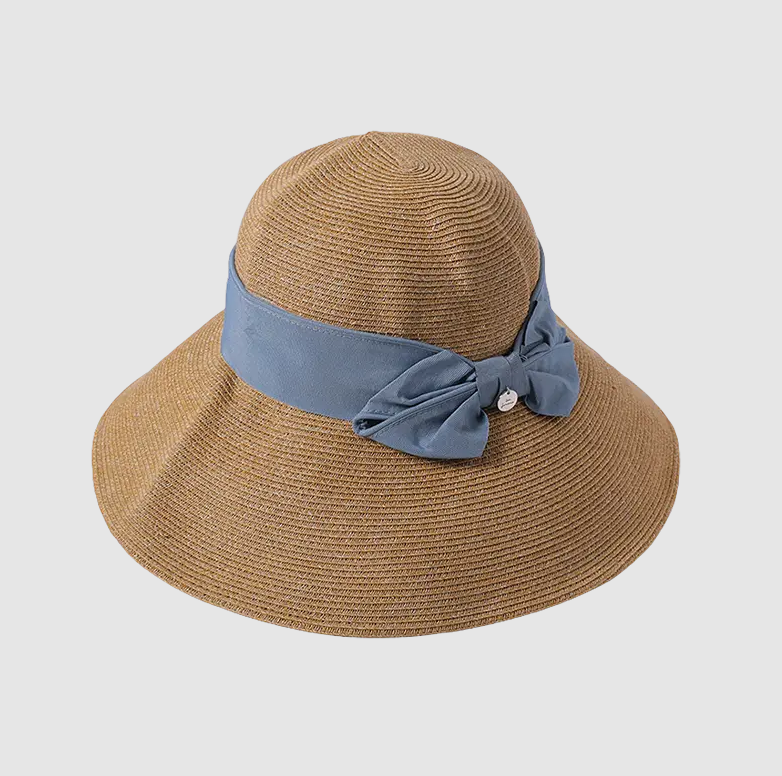
The performance and comfort of headwear depend heavily on material selection, especially in Handcrafted Straw Hats for Women, where natural fibers define both durability and aesthetics.
Common materials include raffia, seagrass, wheat straw, and palm leaves. Each fiber has distinct structural characteristics. Raffia, for example, is highly flexible and suitable for crocheted designs. Palm fibers, on the other hand, offer tighter weaves and better UV resistance due to their dense composition.
Fiber preparation is a crucial step. Raw plant leaves are dried, stripped into fine strands, and sometimes steamed to increase pliability. Moisture content must be carefully controlled—typically maintained below 12%—to prevent brittleness during weaving.
Weaving techniques vary by region and design purpose. Braided straw is often sewn into spiral hats using industrial stitching for reinforcement, while high-end pieces may use continuous handweaving with no visible seams. This impacts both aesthetics and durability.
Ventilation is an engineered feature in straw hats. Micro gaps in the weave allow air circulation, reducing heat buildup by improving evaporative cooling. Hats with lattice-style weaving can improve airflow by up to 30–40% compared to dense weaves.
Weight is another key factor. A well-constructed women’s straw hat typically weighs between 80–180 grams, making it suitable for long outdoor wear without discomfort.
These material choices reflect a balance between practicality and design. Lightweight structure, UV protection, and flexible shaping all contribute to the increasing popularity of natural fiber headwear in modern fashion markets.

 English
 Arabic
 French
 Spanish
 Portuguese
 Deutsch
 Turkish
 Dutch
Dutch
 Italiano
 Romaian
 Portuguese (Brazil)
 Greek
Greek
