


Choosing the Right Material for Rolling Bearings
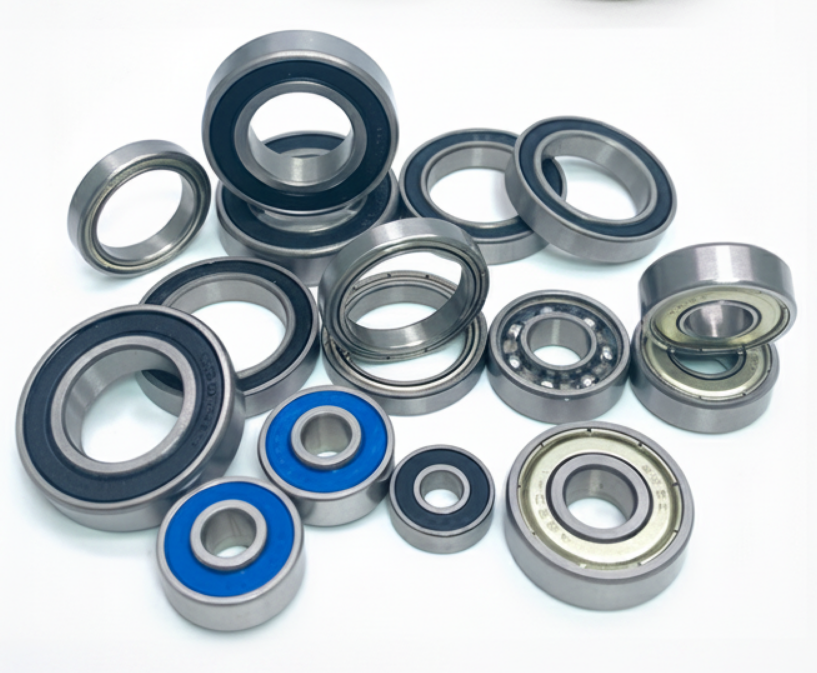
Material selection plays a critical role in determining the durability, load capacity, and operating conditions of modern rotating components. In the case of Deep Groove Ball Bearings, the choice of steel or alternative materials directly affects fatigue resistance, corrosion behavior, and temperature tolerance.
The most commonly used material is high-carbon chromium steel, often known as AISI 52100 or GCr15. This material offers hardness levels around 58–65 HRC after heat treatment, making it suitable for high-load and high-speed applications. It also provides excellent wear resistance under continuous rolling contact stress.
For environments exposed to moisture or chemicals, stainless steel variants such as AISI 440C are often used. These offer improved corrosion resistance but slightly lower load capacity due to differences in hardness compared to standard bearing steel.
Ceramic hybrid designs are also increasingly used in specialized applications. Silicon nitride balls combined with steel rings reduce friction and allow higher rotational speeds, sometimes exceeding 1.5 million DN (diameter × speed factor). These designs are particularly effective in precision equipment and high-speed spindles.
Lubrication compatibility is another important factor. Grease viscosity must match operating temperature ranges, typically between -30°C to 120°C for standard industrial use, although special lubricants extend this range further.
Material engineering ensures that Deep Groove Ball Bearings can be adapted to industries ranging from automotive systems to food processing machinery, where hygiene, speed, or corrosion resistance may be the primary requirement.

 English
 Arabic
 French
 Spanish
 Portuguese
 Deutsch
 Dutch
Dutch
 Italiano
 Russian
 Romaian
 Portuguese (Brazil)
 Greek
Greek
