


Forged Wheel Engineering for Track and Street Use
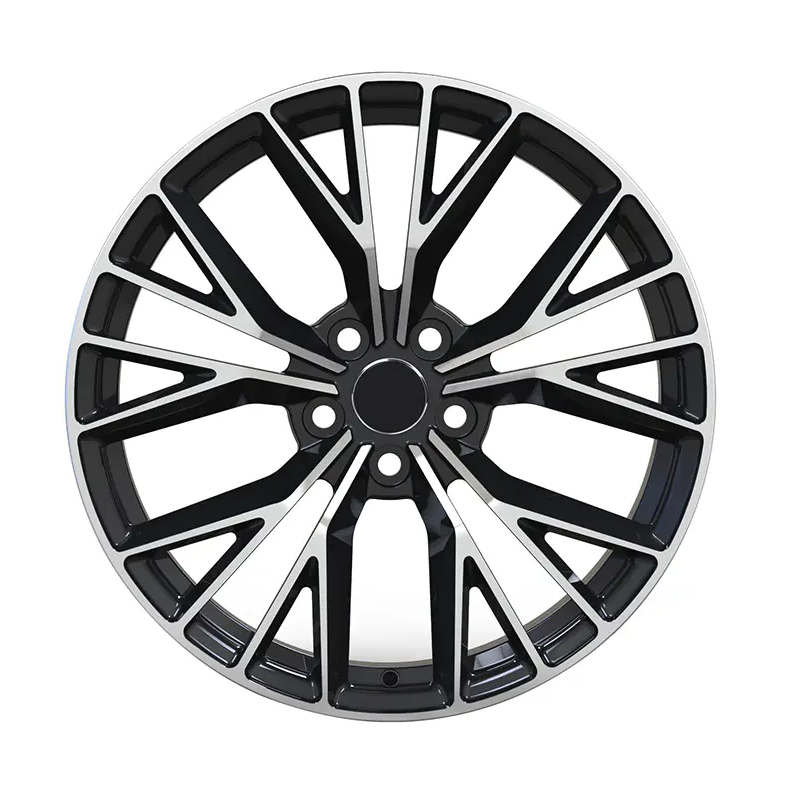
Forged wheel systems are engineered to enhance vehicle dynamics through weight reduction and structural optimization. One of the most important benefits is the reduction of unsprung mass, which directly affects suspension responsiveness and tire contact consistency.
A typical forged wheel constructed from 6061-T6 aluminum alloy weighs between 8 kg and 12 kg for a 18–20 inch configuration, depending on design complexity. This is significantly lighter than cast alternatives, which can exceed 15 kg for similar sizes.
By reducing rotational inertia, forged wheels allow faster acceleration and deceleration response. For example, a 15% reduction in wheel weight can improve acceleration times by approximately 1–3% depending on drivetrain configuration.
Heat dissipation is another performance advantage. Forged aluminum’s dense microstructure improves thermal conductivity, helping brake systems maintain more stable operating temperatures during repeated high-speed braking events.
On race circuits, this translates into reduced brake fade and more consistent lap times. Additionally, the increased structural integrity allows forged wheels to handle higher lateral loads, often exceeding 1,200 kg per wheel in performance-rated designs.
Modern Forged Wheel Factory production lines also use finite element analysis (FEA) during the design phase. This allows engineers to simulate cornering loads, pothole impacts, and braking stress before manufacturing begins.
The combination of simulation-driven design and precision forging ensures that each wheel is optimized not only for strength but also for real-world driving behavior.

 English
 Arabic
 Spanish
 Portuguese
 Deutsch
 Turkish
 Dutch
Dutch
 Italiano
 Russian
 Romaian
 Portuguese (Brazil)
 Greek
Greek
