


Engineering Principles Behind Home Foot Therapy Devices
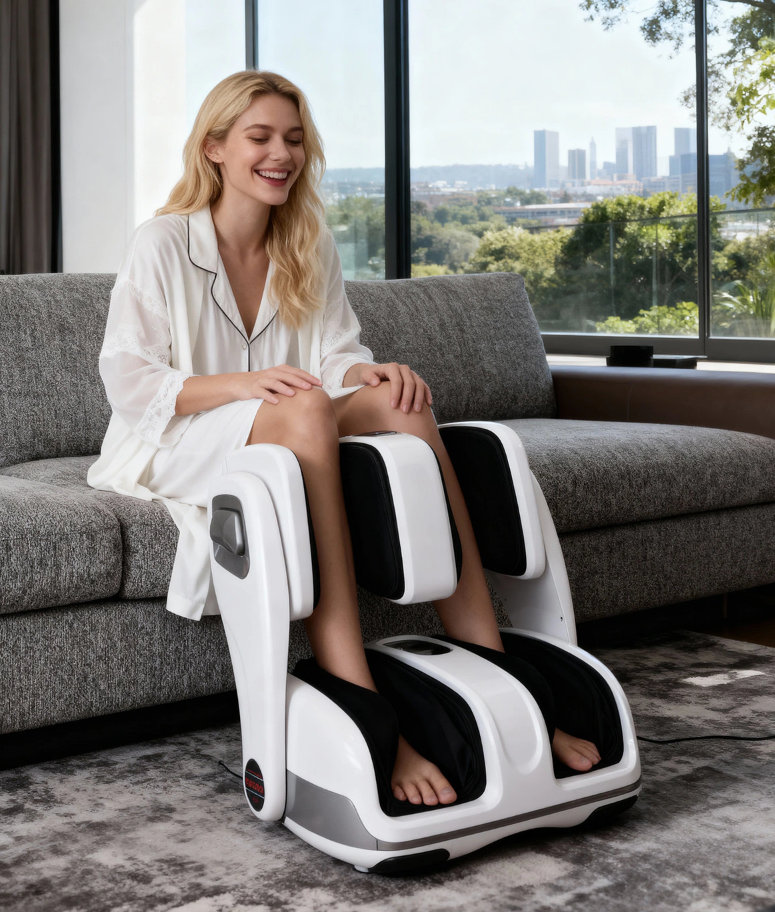
The growing demand for home wellness devices has led to significant innovation in foot therapy equipment. A typical Electric Foot Massager integrates multiple engineering systems including motors, air pumps, heating modules, and electronic controllers.
At the core of most devices is a dual-motor system that drives rotating massage heads. These motors typically operate at low-voltage DC power (12V–24V) for safety and efficiency. The rotating nodes simulate kneading and pressing motions similar to human thumbs, targeting pressure points along the foot arch and heel.
Many advanced models include air compression systems. These use internal pumps to inflate and deflate air chambers placed around the foot. Compression cycles often range from 5–15 seconds per cycle, creating a squeezing motion that improves lymphatic flow and reduces swelling.
Some units also integrate vibration platforms operating at frequencies of 30–120 Hz. This high-frequency stimulation activates sensory nerves, providing a relaxing neurological response that helps reduce perceived pain and tension.
Heating components are usually carbon fiber or PTC ceramic heaters. These ensure stable temperature control with automatic safety shut-off systems to prevent overheating.
Control systems are typically microprocessor-based, allowing users to adjust massage modes, timing (often 10–30 minutes per session), and intensity levels. Some models even include preset programs such as “relax,” “therapy,” or “deep kneading.”
Overall, the technology behind electric foot massage devices blends biomechanics and electronics to create a compact personal wellness system.

 English
 Arabic
 Spanish
 Portuguese
 Deutsch
 Turkish
 Dutch
Dutch
 Italiano
 Russian
 Romaian
 Portuguese (Brazil)
 Greek
Greek
