


Corrosion and Cut Resistance in High Security Locks
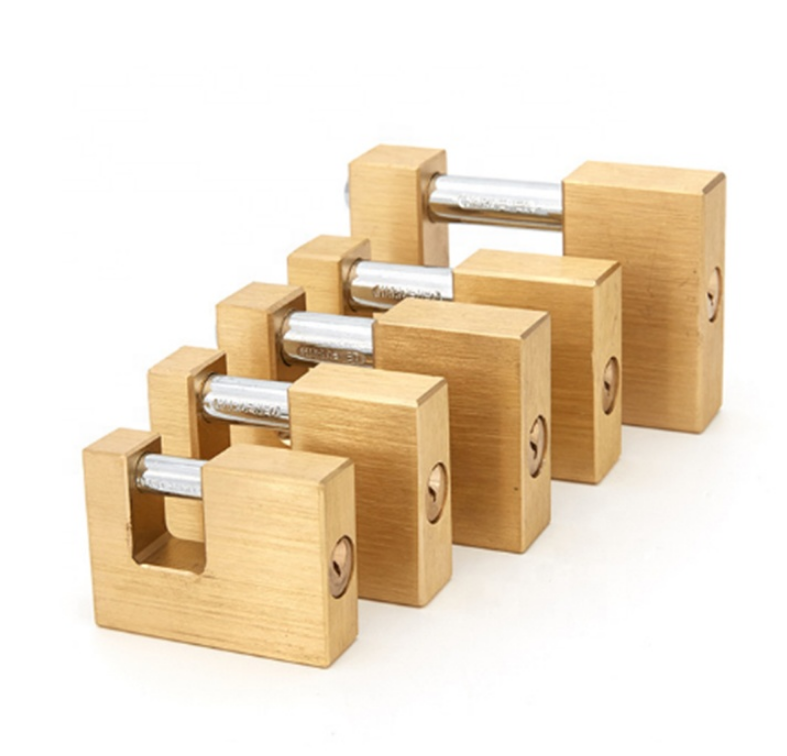
The performance of a High Security Padlock depends heavily on its material composition. Modern lock manufacturing combines metallurgy and surface engineering to achieve resistance against physical and environmental threats.
The most common shackle materials include boron steel, hardened alloy steel, and stainless steel variants. Boron steel is widely used because it maintains high tensile strength while resisting deformation under cutting stress. Hardened steel shackles are often heat-treated to achieve uniform hardness throughout the structure, reducing weak points.
The lock body is usually constructed from solid brass, zinc alloy, or hardened steel shells. Brass offers corrosion resistance and stability in outdoor environments, while steel bodies provide enhanced impact resistance. In high-exposure environments such as marine or industrial zones, stainless steel housings are preferred due to their ability to resist oxidation and salt corrosion.
Surface treatments also play a critical role. Common coatings include:
Electrophoretic black coatings for anti-corrosion protection
Nickel plating for wear resistance
Powder coatings for environmental sealing
Internal components often use stainless steel springs and anti-rust pins to ensure long-term reliability. Some designs integrate drainage channels to prevent water accumulation, which reduces freezing risks in cold environments.
Typical performance benchmarks for a High Security Padlock include:
Corrosion resistance: 240–500 hours salt spray testing
Shackle tensile strength: up to 12–18 kN
Operating temperature range: -40°C to +60°C
These material advancements ensure the lock remains functional under extreme conditions while maintaining resistance to mechanical attacks. The combination of metallurgy and protective coatings makes modern high-security locks suitable for outdoor infrastructure, logistics hubs, and high-value storage systems.

 English
 Arabic
 French
 Portuguese
 Deutsch
 Turkish
 Dutch
Dutch
 Italiano
 Russian
 Romaian
 Portuguese (Brazil)
 Greek
Greek
